









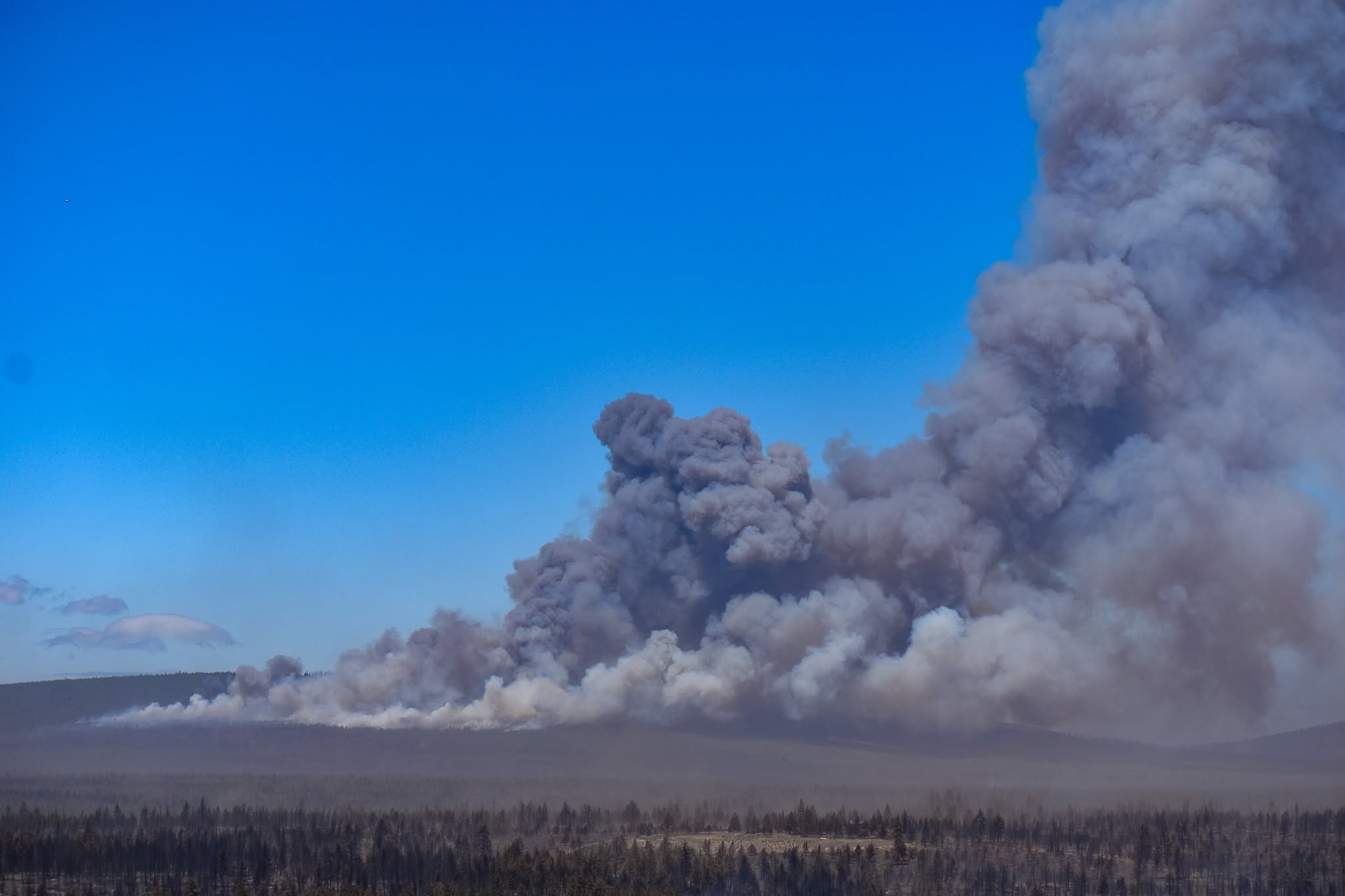





















Wildfire smoke is once again spreading far beyond the flames, with hazy skies and air quality concerns pushing east from the Northwest into the Midwest, Mid-Atlantic and even parts of the Southeast as the jet stream carries the plume across the country.
LIGHTNING-SPARKED WILDFIRES RAGE ACROSS OREGON AND WASHINGTON AFTER MID-JULY SEVERE STORMS
Critical fire weather conditions have fueled explosive wildfire growth across the Pacific Northwest and Northern Great Basin, where dozens of large fires continue to burn in Oregon and Washington.
According to the National Interagency Fire Center, the Northwest is currently battling more than 30 large active fires that have collectively consumed nearly one million acres. The majority of them are in Oregon alone.
Smoke from the fires will continue to degrade air quality across Oregon, Washington, Idaho, Montana and perhaps as far east as North Dakota.
Boise, Idaho, has been under consistently degrading air quality, staying firmly in the very unhealthy category.
Much of the worst smoke is confined to Oregon and Idaho, spreading into Montana and the Dakotas. This is where the smoke is reaching near-surface levels.
Over the coming days, the smoke will begin to shift back toward the east, but nowhere near the levels experienced a couple of weeks ago with the Canadian wildfires.
This time around, the smoke is expected to stay higher in the atmosphere because there are no nearby weather systems to push it down to the ground, limiting its impact on the air people breathe.
But that doesn't mean the smoke will be impact-free.
'EVOLVING CRISIS': COULD EL NIÑO BRING NEEDED RAIN TO THE 2 LARGEST RESERVOIRS IN THE US?
Moderate air quality issues are still possible across parts of the Upper Midwest and Great Lakes, but conditions are not expected to approach the hazardous levels seen in recent days.
Even where air quality remains relatively good, wildfire smoke will still create hazy skies well beyond the Northwest.
The smoke, lingering 20,000 to 40,000 feet above the ground, is expected to spread as far east as the Mid-Atlantic and as far south as the Southeast as it circulates around a sprawling heat dome over the central U.S.
WHAT IS A HEAT DOME AND HOW CAN IT AFFECT YOU DURING THE SUMMER MONTHS?
While the elevated smoke isn't expected to significantly affect air quality at the surface, it will give the sky a milky appearance and could lead to more vivid sunrises and sunsets.
The post Wildfire smoke from the Northwest sweeps across the US to Mid-Atlantic and Southeast appeared first on Fox Weather