













Affordability and data centers were on the ballot this November. Voters made it clear that they are concerned about both issues: prices are too high and the neighborliness of data centers is in doubt. In a time of economic turbulence, cities and counties are struggling to pay for schools, roads and public safety without the tax revenue data centers generate. Where can part of the solution to affordability and concerns with data centers be found? Vacant lots.
Vacant lots can host data centers that are well maintained, comply with local architectural requirements, have security and bring in much-needed cash for local projects. An eyesore and security problem can become a revenue generator and a secure property. However, some are determined to keep data centers from developing the local economy and unsightly properties at any cost.
In early November, an activist helped block the development of a $5 billion data center that was set to break ground in the next year or so. The data center was supposed to be built on the site of Landover Mall, which closed in 2002. The vacant lot is now overgrown with grass and weeds, stretching across nearly 90 acres in Landover, Md.
AMERICA'S REDDEST STATE CHASES BILLION-DOLLAR BOOM AS OTHERS SOUR ON MASSIVE EMERGING INDUSTRY
Prince George's County, home to the former mall, is facing a $130 million budget deficit. It has lost a Six Flags amusement park, is losing the Washington Commanders to Washington, D.C., and has suffered thousands of federal job losses. Developers projected about $53.5 million a year in local tax revenue if the data center were to be built.
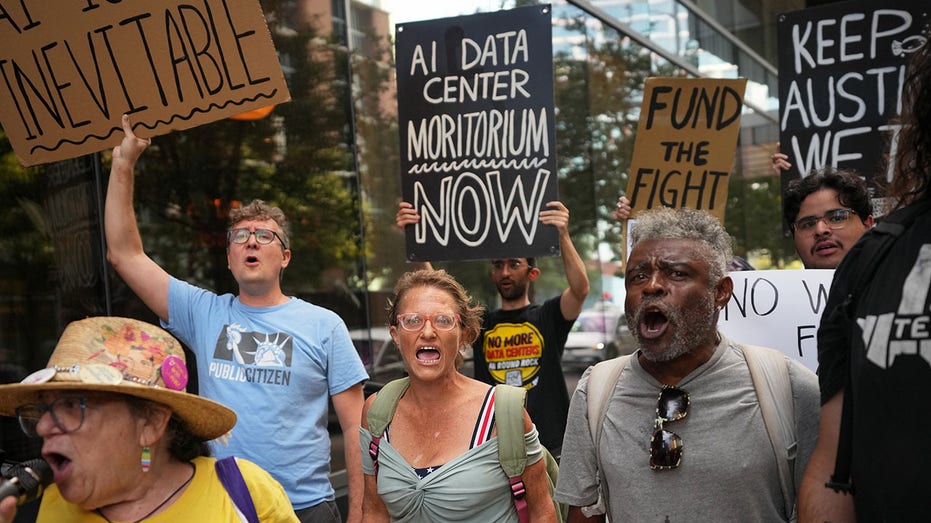
The activist, Taylor Frazier McCollum, isn't moved by those numbers or how they help her neighbors. "Money is, you know, a made-up concept," she said. "We buy into it every day, and we choose that this has value and this doesn't have value and to me the environment has the highest and utmost value and I need to honor that in any way."
The rejection of a project to help revitalize a site that sorely needs it and fill the county's coffers perfectly encapsulates the political debate around data centers. Too often, proposed data centers receive automatic opposition from activists and politicians. As a result, some of America's most vulnerable and desperate communities are losing millions of dollars in tax revenue that could fund schools, fix roads, pay emergency responders and more.
Landover Mall is sadly not the only example. Local opposition blocked or delayed at least 75 data center projects across the country worth approximately $130 billion in the first quarter of 2026, which Data Center Watch describes as the largest single-quarter total on record. That's roughly as much as all of 2025, in just three months.
HOW AMERICA CAN WIN THE AI RACE WITHOUT BURNING VOTERS
In Virginia, Prince William County stands to miss out on as much as $400 million in projected annual tax revenue following the collapse of Digital Gateway, once billed as one of the largest data center complexes in the world. The county had approved the project, but courts invalidated its rezoning approvals. The remaining developer withdrew its legal challenge in July 2026, effectively ending the plans.
On the other hand, communities that are looking to the future and allowing data centers are reaping the benefits. Virginia’s Loudoun County has embraced data centers, which have generated 38% of general fund revenue in the county’s FY2026 budget. That revenue has helped the county lower its real property tax rate every year for a decade, from $1.145 per $100 of assessed value in 2016 to $0.805 in 2026. That's real money back in homeowners' pockets. That is revenue its neighbor, Prince William County, is missing out on.
HOMEOWNERS IN THE HEART OF AMERICA’S AI BOOM ARE GETTING AN UNEXPECTED PAYOFF
In Henrico County, Virginia, data center tax revenue pays for an Affordable Housing Trust Fund that helps first-time homebuyers with down payments. A single mother working toward a nursing degree said her new mortgage costs less than her old rent. In Richland Parish, Louisiana, Meta's data center expansion helped the parish pay for $50,000 teacher bonuses.
THE POWERFUL WAY AMERICAN COMMUNITIES CAN BENEFIT FROM THE NEW TECH BOOM REVEALED BY DATA CENTER CEO
Data center developers have a responsibility to communities: listen to their concerns, be transparent and collaborative about their plans, design in ways their neighbors approve and work to mitigate or eliminate undesirable local impacts. They must also pay their own electric and water costs, establish noise limits and continually work with local community groups and elected officials to address concerns as they arise.
CLICK HERE FOR MORE FOX NEWS OPINION
Data center development can be and often is a win-win for developers and the community. But even these efforts are not enough for some. Money may be a "made-up concept" to some, but the lower tax rates in Loudoun County, the down payment in Henrico and the teacher bonuses in Richland Parish are real.
Data centers can turn a decades-long vacant parking lot overgrown with weeds into an economic engine, helping to close a $130 million hole in the budget. Immovable opponents are ignoring the economic benefits data centers can bring and leaving funding for community projects on the table. History shows other counties will take advantage of this lack of foresight and benefit.
The post War against data centers is costing local communities millions of dollars appeared first on FOX News