















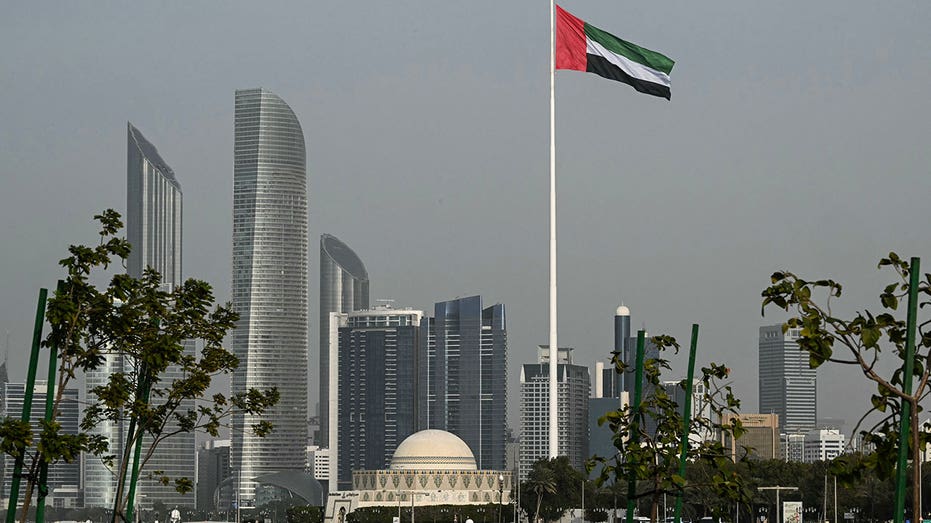





















With Operation Epic Fury, an old claim has resurfaced: that the United Arab Emirates (UAE) and the Gulf monarchies are weak, artificial states that will fail under pressure. This argument has been proven wrong every time it has been tested. It is being disproved again now, as Iranian ballistic missiles cross Gulf airspace, UAE defenses intercept most of them, and daily life continues below. At this point, the fragility thesis doesn’t need a rebuttal; it needs a thorough examination.
This thesis usually comes from two very different groups: the Muslim Brotherhood and some Western academics. For the Muslim Brotherhood, the idea that Gulf monarchies are illegitimate and temporary is not just political messaging. It forms a core part of their worldview. In the early 20th century, Muslim Brotherhood founder Hassan al-Banna rejected hereditary monarchy as a valid Islamic model. The Brotherhood’s view of empowerment only holds if current rulers are seen as morally lacking and destined to fail. In this view, Gulf stability is not just an inconvenience; it poses a direct ideological threat.
This is especially true for the UAE. The Emirati model is not only anti-Brotherhood politically; it is also anti-Brotherhood in cultural terms. The UAE lives an Islam that is tolerant, orderly and comfortable with diversity and pluralism. This matters because it quietly undermines one of the Brotherhood’s key claims: that political Islam is the only way to achieve dignity, authenticity or justice in a Muslim society. A prosperous, stable Muslim-majority state that embraces religious coexistence doesn’t just challenge that idea; it shows it is outdated.
That is why symbols like the Abrahamic Family House are important. A mosque, church and synagogue on one campus in Abu Dhabi, the Abrahamic Family House isn’t just a branding effort. It represents a clear statement about the type of country the UAE is. It reflects values that Americans understand: religious coexistence, public order and the idea that prosperity and tolerance can support each other instead of competing. This shared value system is one reason the partnership between the U.S. and the UAE has grown steadily over the decades, from Desert Storm to the current conflict. It is these shared values of prosperity and pluralism and safety that make me, as a Jew, proud to call the UAE my second home. It is a country where I have never once felt physically unsafe to declare my faith and provides a unique opportunity to meet people from diverse cultures and a secure base from which global business can be conducted.
12 ARAB AND ISLAMIC COUNTRIES UNITE TO CONDEMN 'HEINOUS' IRANIAN ATTACKS
The anti-UAE versions of the fragility story were pushed by prominent figures, not just fringe voices. In 2014, Qatar-based ideologue Yusuf al-Qaradawi condemned the UAE as anti-Islamic on Qatari television. In December 2024, his son, Abdulrahman, spoke in Damascus and expressed hope that the UAE, Saudi Arabia and Egypt would fall. Al Jazeera Arabic, especially under former director Wadah Khanfar, often provided a platform for this perspective, painting the UAE and the wider Gulf Cooperation Council as unstable and lacking moral integrity.
The Western academic version of this thesis had a different tone but often reached similar conclusions. In a book, :After the Sheikhs," author Christopher Davidson, a Fellow at Durham University in the UK, predicted in 2012 that most Gulf regimes could collapse within two to five years. In 2011, Kristian Coates Ulrichsen, a fellow for the Middle East at Rice University's Baker Institute for Public Policy, cautioned that a "perfect storm" could destabilize Gulf societies.
Later, the International Crisis Group, a conflict mitigation nonprofit, described the Gulf as divided and unstable.This was not a conspiracy but analysis based on a flawed assumption: that rentier states, reliant on oil wealth, must be weak at their core. The mistake was confusing governance issues with a lack of real state power.
WEALTHY GOLDEN VISA HOLDERS EVACUATED FROM UAE AS IRAN CONFLICT ESCALATES
This error has become glaringly obvious during the current conflict. When Iranian missiles began to strike across the Gulf on March 1, the fragility narrative came up again. Analysts described Gulf economic models as weak and vulnerable. Tehran seemed to believe this too. Its decision to target Dubai, a city with limited direct U.S. military presence, was a calculated move, hoping that disruption would cause panic. Iran misjudged the Gulf’s business model, assuming it was also its weak point.
The UAE held its ground, as did the Gulf in general. Exchanges reopened, and airports resumed operations. Qatar, despite years of mediating between Tehran and Washington, D.C., shot down two Iranian Su-24s nearing its airspace. This was a significant event and showed that Gulf states aren’t passive under pressure. Given the right conditions, they will respond.
By March 10, the UAE had endured over 250 ballistic missiles, more than 1,400 drones and eight cruise missiles. Its layered air defenses, developed through extensive planning and investment, have performed at a level few countries could achieve. American THAAD and Patriot systems, South Korea’s Cheongung II in its first battle deployment, Israeli developed Barak-8 batteries and US-operated assets have intercepted over 90% of incoming threats. Fatalities have been minimal. Cafés remain open, roads are busy, and people aren’t fleeing. Many openly express loyalty to the country.
These aren’t signs of a mirage. They indicate a state that was prepared.
The explanation goes deeper than just military hardware. Yes, the UAE invested early, diversified wisely and built one of the most advanced defense structures in the region. At the same time, it also established something less measurable but equally important: a working social agreement. More than 200 nationalities live in the UAE. Most stayed during Covid, and they are staying through missile attacks, not out of obligation, but because they genuinely feel at home there. This quiet sense of belonging, within a confident Muslim-majority state that embraces differences, is a key foundation of Emirati resilience.
The UAE is not a fragile mirage. It is a fortress oasis: pluralistic, orderly, heavily defended and supported by one of the strongest security partnerships that the United States has in the region. Critics have repeatedly predicted its collapse. Instead, under pressure, it has demonstrated endurance, legitimacy and strength, along with the broader nations of the Gulf Cooperation Council.
The post United Arab Emirates is no fragile mirage, it's a fortress oasis appeared first on FOX News