




































The U.S. Supreme Court ruled against Hawaii on Thursday, handing concealed-carry permit holders a major victory in a 6-3 decision.
The Supreme Court sided with the plaintiff in Wolford v. Lopez, who contested Hawaii's state law requiring a property owner's explicit permission to allow lawful gun owners to bring firearms into public businesses.
"Hawaii's law at issue here violates the constitutional right to keep and bear arms," Justice Samuel Alito wrote. "This regime hobbles what the Second Amendment protects: the right of Americans to carry arms for self-defense as they go about their daily lives."
The ruling reverses a decision by the U.S. Court of Appeals for the Ninth Circuit, which had upheld Hawaii's restrictions after the state enacted them in response to the Supreme Court's 2022 Bruen decision.
After Bruen struck down New York's "proper cause" licensing requirement and held that Americans have a constitutional right to carry handguns outside the home for self-defense, Hawaii overhauled its firearms laws.
SUPREME COURT HANDS TRUMP TWO MAJOR IMMIGRATION VICTORIES
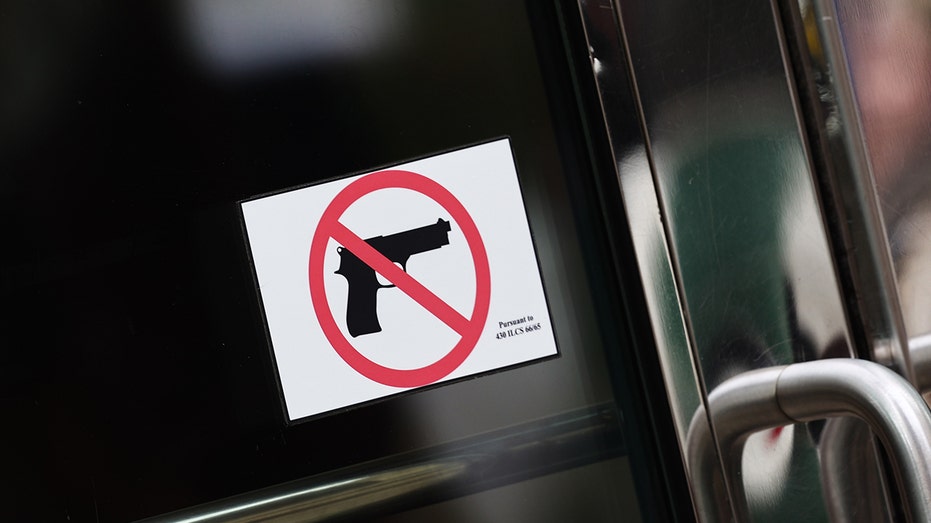
Among the new provisions was a requirement that concealed-carry permit holders could not bring firearms onto another person's private property, including businesses open to the public, unless the owner provided express authorization through signage or verbal or written permission. In Second Amendment advocacy circles, the law became known as the "vampire rule."
Alito wrote that the law could subject lawful concealed-carry permit holders to criminal liability while going about routine daily activities, such as stopping at a gas station, pharmacy or grocery store. He illustrated the concern through a hypothetical based on Jaime Caetano, a woman who sought to carry a weapon after threats from an abusive former partner, imagining her running ordinary errands while lawfully carrying a firearm for self-defense.
"Unless each of these establishments has posted a sign saying 'Guns Welcome' or something to that effect, each visit could expose her to criminal liability," Alito wrote.
The court rejected Hawaii's argument that its unique culture and history justified stricter gun laws. The state had relied in part on what its courts call the "spirit of Aloha" to defend the regulations.
GUN TRAINING COURSES EXPERIENCE SURGE IN SIGN UPS: 'PEOPLE DON'T WANT TO BE THE VICTIM ANYMORE'
"The Second Amendment cannot give way to 'the spirit of Aloha' in Hawaii any more than it can yield to the spirit of the Big Apple or the Windy City," Alito wrote. "Merely local attitudes can neither shrink nor inflate the meaning of fundamental Bill of Rights guarantees."
The Court also rejected Hawaii's reliance on an 1865 Louisiana law enacted as part of the post-Civil War Black Codes as evidence that similar restrictions have historical roots. Hawaii argued the statute showed there was a historical tradition of requiring people to obtain permission before carrying firearms onto another person's property.
But the majority said the law shouldn't be used as a historical guide because it was part of the Black Codes, a set of post-Civil War laws aimed at disarming newly freed Black Americans.
"Unless we put history entirely out of our minds, Hawaii's claim that this tainted artifact illuminates the original understanding of the right to keep and bear arms cannot be taken seriously," Alito wrote.
However, Justice Elena Kagan reached the opposite conclusion in a brief dissent. She argued Hawaii's law fit within the nation's historical tradition of gun regulation, pointing to colonial-era laws that also required people to obtain permission before carrying firearms onto another person's property.
Justice Ketanji Brown Jackson, joined by Justice Sonia Sotomayor, took a broader approach in a separate dissent. Jackson argued the dispute wasn't really about the Second Amendment at all, but about the rights of private property owners.
"There is no constitutional right to enter private property without the owner’s permission, let alone with a firearm," Jackson wrote. "So the question this case presents is merely how a property owner must communicate his decision to exclude or to invite armed carry, including whether a State may alter the background property-law rules that set the default as one or the other."
"The Second Amendment has nothing to say about that," Jackson continued.
Gun-rights organizations quickly celebrated the ruling, while Hawaii officials had not publicly responded as of publication.
Assistant Attorney General Harmeet Dhillon celebrated the ruling on social media, noting the Justice Department Civil Rights office co-authored an amicus brief for the case.
FEDERAL JUDGE APPROVES COLORADO LAW BANNING PEOPLE UNDER 21 FROM BUYING A GUN
"A great return to sanity and historical presumptions!" Dhillon wrote.
The National Rifle Association, which filed an amicus brief urging the Court to strike down Hawaii's law, called the decision "a major victory for the Second Amendment."
"Law-abiding gun owners will no longer be forced to beg for special permission simply to exercise their constitutional right to bear arms in public places," John Commerford, NRA-ILA Executive Director said in a statement.
The Second Amendment Foundation, which also filed an amicus brief, said the Court correctly rejected what it described as an attempt to create a de facto public-carry ban.
"Our stance is that one of the most fundamental underlying principles of the Second Amendment is the right to carry in public for self-defense," said SAF Executive Director Adam Kraut. "If a business does not want you to carry a firearm on the premises, the burden should be on the proprietor, not the private citizen."
SAF founder Alan Gottlieb said the ruling should serve as a warning to other states with similar laws.
"This law was nothing more than a thinly veiled attempt to disarm peaceable citizens, and we're grateful the Supreme Court saw through the ruse," Gottlieb said. "With this precedent-setting ruling in hand, other states that have similar laws in place should be on notice."
Fox News Digital reached out to attorneys' representing Hawaii Attorney General Anne Lopez and the plaintiffs for comment.
The post Supreme Court strikes down blue state's 'vampire rule' in major win for gun rights appeared first on FOX News