








































- The stock market's ongoing rally off Iran-war lows is reminiscent of a similar recovery in 2025.
- In both cases, traders moved past a major geopolitical headwind and focused instead on a more positive catalyst.
- How last year played out offers hints as to what could happen in 2026 — with one key difference.
You're jolted awake in a cold sweat by your alarm. The first thing you do is check pre-market equity indexes. They're flirting with records again. Investors have moved past President Trump's geopolitical policy that tanked stocks a few weeks ago. There's a bullish catalyst that everyone can agree on. Life is good.
Then your real alarm goes off. It was all a dream. You were reliving April 2025.
In your groggy state, you check your phone. You're back in the present. Stocks are near all-time highs. The market seems to have moved past the Iran war. It's all about positive earnings revisions now.
If this feels familiar, it should.
There are clear parallels between the tariff-induced chaos of 2025 and the Iran-war volatility of 2026. Let's break it down, and see what it might mean going forward:
The move (and swift recovery)
In 2025, Trump's Liberation Day tariffs knocked the S&P 500 down 12% in a week. The index clawed it all back within a month, then resumed a choppy climb higher.
In 2026, Trump's Iran war offensive sent the S&P 500 8% lower over a month. The drawdown was slower, but the rebound was faster — just two weeks.
<script type="text/javascript" defer="" src="https://datawrapper.dwcdn.net/hEXK5/embed.js" charset="utf-8" data-target="#datawrapper-vis-hEXK5"></script><noscript>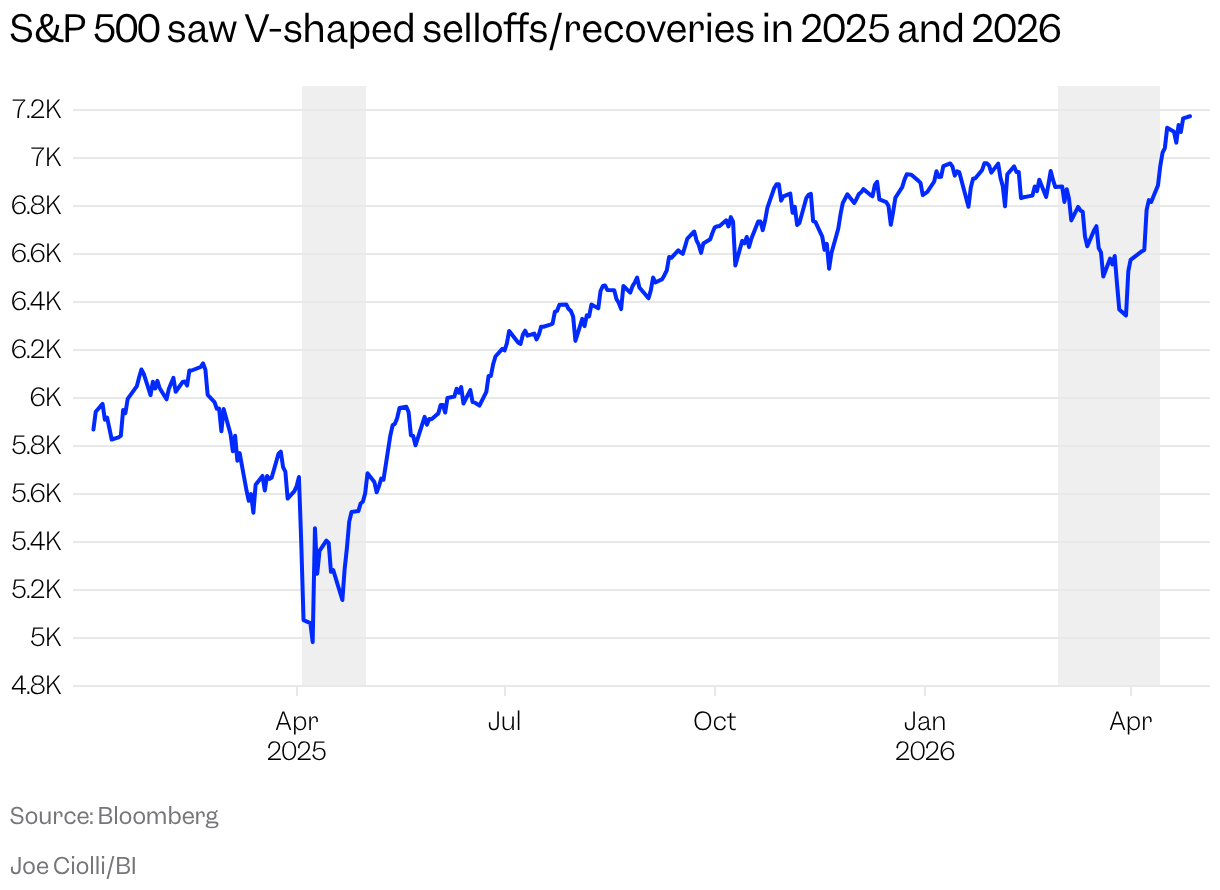 </noscript>
The policy overhang
In 2025, tariffs sparked fears of inflation and pricier goods. Trump ultimately watered down many proposals, and the ones that stuck weren't as inflationary as feared.
In 2026, stock investors worried about spiking oil feeding into — you guessed it — inflation. After the initial sell-off, traders grew optimistic about a peace deal and piled back in.
The bullish fuel
In 2025, investors rallied around rate cuts. The narrative intensified over the summer alongside AI mania, and the Fed ended up delivering three cuts later in the year.
In 2026, the story is earnings growth, historically the market's most reliable driver of gains. The chart below shows that conditions are even more favorable than they were during 2025's big rally.
Morgan Stanley Research
Lessons for the future
Have a backup narrative ready: In 2025, rate-cut optimism did a lot of heavy lifting for the market's bull case, but AI offered a crucial second leg. Investors proved flexible, shifting between narratives when needed.
Today, there's no obvious backup to AI-driven earnings growth. The Iran war has effectively sidelined rate cuts. Without a second catalyst, the rally looks more fragile.
Expect volatility to continue: The S&P 500 rose for seven straight months after Liberation Day — but not smoothly. Headwinds kept popping up.
That's likely again. The Iran conflict is ongoing and far more complex than tariff policy, which could be tweaked or de-escalated at will. There are still twists and turns to come.
Old headwinds die hard: Just because the market moves on doesn't mean it forgets. Sure, AI sentiment is positive now, but one event or shaky forecast can throw it into disarray. And if inflation creeps back into the picture, that's still a near-universal sell signal.
History may not repeat exactly. But in this case, it's rhyming pretty loudly. It's best to take notice — and prepare.
The post The stock market is having a serious case of deja vu. Here's what it means for the future. appeared first on Business Insider