









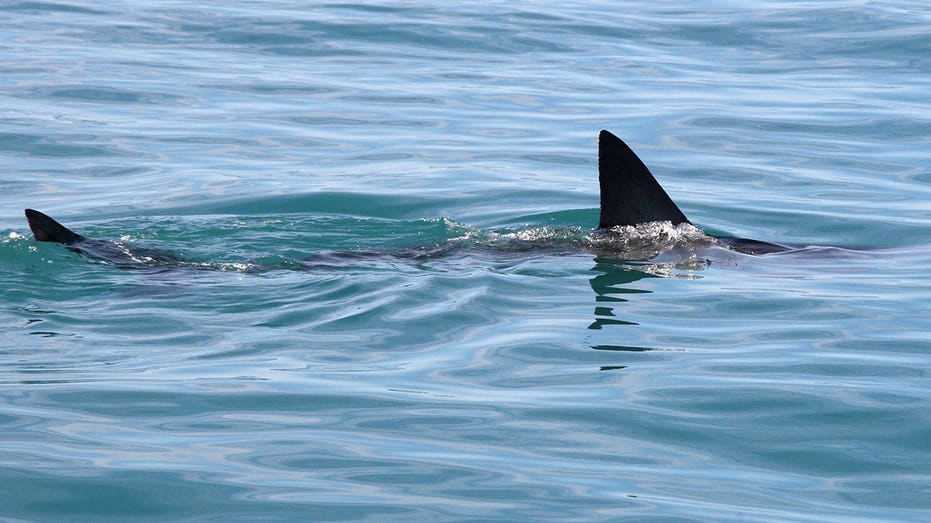





















While shark encounters are exceedingly rare, an unexpected bite can pose an immediate, life-threatening emergency.
In the critical first five minutes following an attack, swift action is the single biggest factor in survival.
Dr. Kenneth J. Perry, an emergency medicine physician based in South Carolina, broke down the vital steps bystanders and victims should take to manage the situation before professional medical care arrives.
SHARK WEEK SHOCKER AS GREAT WHITE BREACHES JUST YARDS FROM OBLIVIOUS BOOGIE BOARDER
The first step is to get the victim onto land or a boat to prevent further bites and avoid drowning. Once out of the water, the focus can shift to bleeding control.
"Shark bites vary in intensity and severity, but the main issue that all of them share is the need to stop the bleeding," Perry told Fox News Digital.
Because shark teeth can easily tear through major arteries, veins and tendons, uncontrolled blood loss is the biggest immediate threat.
10-FOOT GREAT WHITE SHARK SPOTTED SWIMMING DANGEROUSLY CLOSE TO YOUNG PEOPLE
For severe limb injuries, it's essential to apply a tourniquet, but many people fail to apply sufficient pressure. The tourniquet must be placed above the wound and tightened to the point where a pulse can no longer be felt, according to Perry.
For example, if a victim is bitten near the elbow, the tourniquet must be placed around the upper bicep and tightened until the pulse at the wrist disappears completely.
"It may be painful, but it is necessary," Perry noted.
This aligns with national trauma protocols from the American College of Surgeons' Stop the Bleed initiative, which emphasizes that effective tourniquet placement requires firm, tight compression to fully stop arterial blood flow.
CLICK HERE TO SIGN UP FOR OUR HEALTH NEWSLETTER
Tourniquets are temporary tools and should be used for as short a duration as possible, Perry cautioned. There is a maximum window of about two hours before tissue damage occurs from lack of oxygenated blood flow.
If someone is stranded in a remote area and immediate emergency transport is unavailable, Perry recommends using a pressure dressing.
CLICK HERE FOR MORE HEALTH STORIES
This involves folding gauze multiple times, placing it directly over the specific point of bleeding, and wrapping it tightly. While a pressure dressing does not eliminate blood loss as completely as a tourniquet, it carries a much lower risk of tissue necrosis (death) during prolonged waits.
Bystanders play a crucial role beyond physical first aid by helping the victim stay motionless and quiet. Panic increases heart rate and blood pressure, which accelerates blood loss, the doctor noted.
Loss of consciousness after a shark attack can have more than one cause, Perry said.
A sudden drop in blood pressure and the body's stress response may trigger fainting. If the victim was deep underwater and surfaced too quickly during the attack, unconsciousness could signal a pressure-related diving injury, such as arterial gas embolism or barotrauma, which requires emergency treatment.
While controlling blood loss is crucial in the first five minutes, long-term recovery involves fighting off severe marine bacteria.
Aquatic bites are notorious sources of aggressive skin and soft-tissue infections like cellulitis, Perry warned.
TEST YOURSELF WITH OUR LATEST LIFESTYLE QUIZ
Once a patient is resuscitated with fluids and blood products at a medical facility, aggressive antibiotic treatment usually follows.
The post Shark Week puts shark bite survival in focus with ER doc's expert tips appeared first on FOX News