



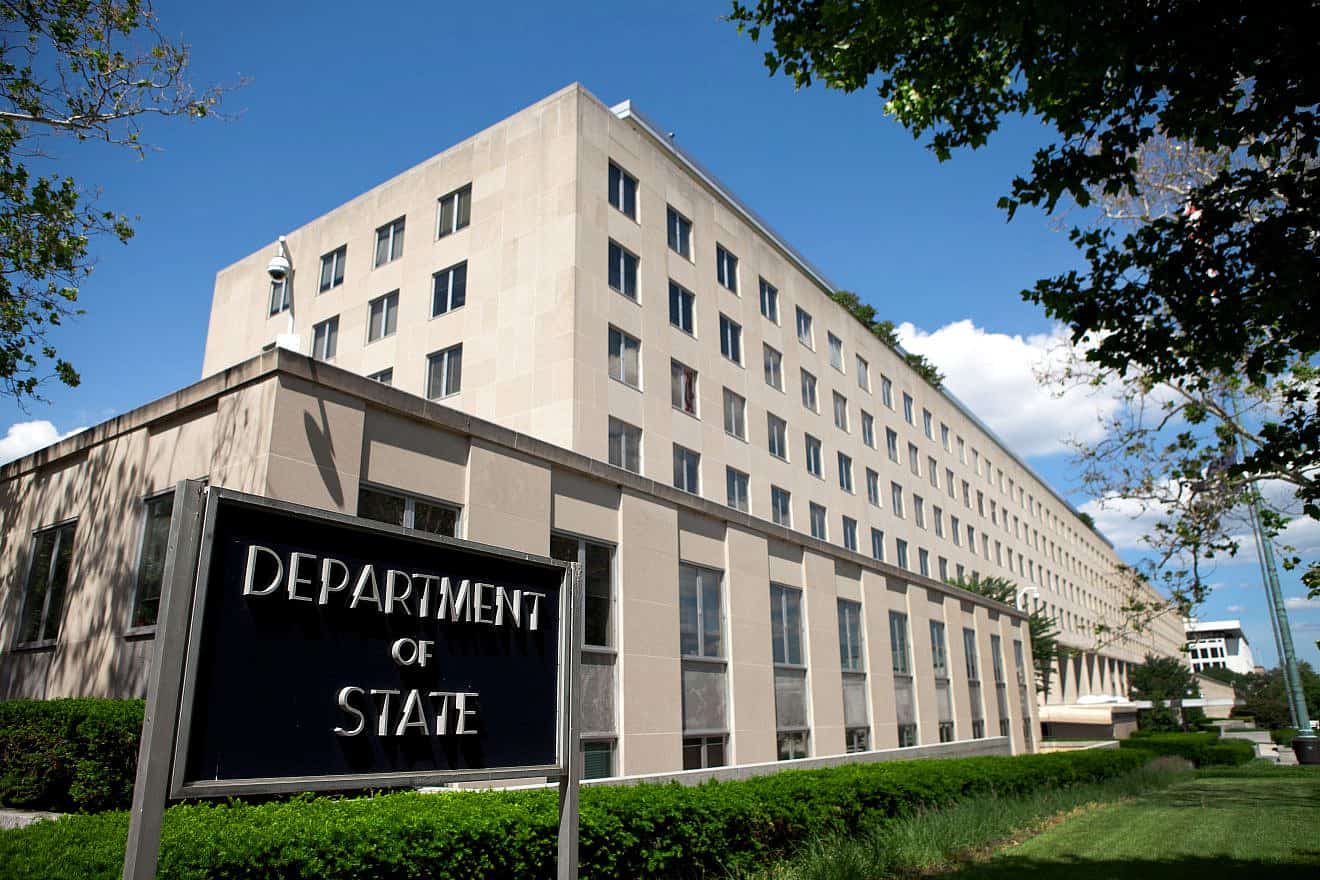
Marco Rubio, Secretary of State
Miami, Florida
QUESTION: We’re joined now by the Secretary of State, Marco Rubio. Mr. Secretary, thank you for joining us this morning.
SECRETARY RUBIO: Thank you.
QUESTION: President Trump was pretty clear yesterday. He said the United States is going to run Venezuela. Under what legal authority?
SECRETARY RUBIO: Under – well, first of all, what’s going to happen here is that we have a quarantine on their oil. That means their economy will not be able to move forward until the conditions that are in the national interest of the United States and the interests of the Venezuelan people are met. And that’s what we intend to do. So that leverage remains, that leverage is ongoing, and we expect that it’s going to lead to results here. We’re hope so – hopeful that it does – positive results for the people of Venezuela, but ultimately, most importantly, for us in the national interest of the United States.
We will no longer have – hopefully, as we move forward here, we’ll set the conditions so that we no longer have in our hemisphere a Venezuela that’s the crossroads for many of our adversaries around the world, including Iran and Hizballah, is no longer sending us drug gangs, is no longer sending us drug boats, is no longer a narcotrafficking paradise for all those drugs coming out of Colombia to go in through the Caribbean and towards the United States. And obviously we want a better future for the people of Venezuela. We want them to have an oil industry where the wealth is – goes to the people, not to a handful of corrupt individuals and stolen by pirates all over the world. That’s what we’re working towards, and we intend to use the leverage we have to help achieve that.
QUESTION: Let me ask the question again: What is the legal authority for the United States to be running Venezuela?
SECRETARY RUBIO: Well, I explained to you what our goals are and how we’re going to use the leverage to make it happen. As far as what our legal authority is on the quarantine, very simple: We have court orders. These are sanctioned boats, and we get orders from courts to go after and seize these sanctions. So they’re – that’s – I don’t know, is a court not a legal authority?
QUESTION: So is the United States running Venezuela right now?
SECRETARY RUBIO: Well, I’ve explained once again; I’ll do it one more time. What we are running is the direction that this is going to move moving forward, and that is we have leverage. This leverage we are using and we intend to use – we started using already. You can see where they are running out of storage capacity. In a few weeks they’re going to have to start pumping oil unless they make changes. And that leverage that we have with the armada of boats that are currently positioned allow us to seize any sanctioned boats coming into or out of Venezuela loaded with oil or on its way in to pick up oil, and we can pick and choose which ones we go after. We have court orders for each one. That will continue to be in place until the people who have control over the levers of power in that country make changes that are not just in the interest of the people of Venezuela but are in the interest of the United States and the things that we care about. That’s what we intend to do.
QUESTION: But when the President was asked yesterday —
SECRETARY RUBIO: The legal authority is the court orders that we have.
QUESTION: When the President was asked yesterday who’ll be running Venezuela, he said it was you, he said it was the Defense Secretary, he said it was the chairman of the Joint Chiefs of Staff. Are you running Venezuela right now?
SECRETARY RUBIO: George, I’ve explained again that the leverage that we have here is the leverage of the quarantine. So that is a Department of War operation – conducting, in some cases, law enforcement functions with the Coast Guard on the seizure of these boats. I’m obviously very intricately involved in these policies, and by the way, very intricately involved in moving forward, in what we hope to see, some of these changes being addressed. Unfortunately, the person that was there before, who was not the legitimate president of the country, was someone we could not work with, was someone that we could not – he had already suckered the Biden administration a couple of years ago on a deal he didn’t keep, and this is someone we simply couldn’t work with.
We are hopeful that there are people in place now – we’re going to find out; the proof will be in what they do or fail to do – that will start making some of these changes that will ultimately lead to a Venezuela that looks substantially and dramatically different from what’s been in place for 15 years. But our number one objective is America. We care about Venezuela, we want it do well moving forward, but our number one objective here is America. No more drugs. No more – no more Tren de Aragua gangs coming our direction. And no more an area of the – a country in our hemisphere that becomes a crossroads for every single adversary we have around the world. Hizballah, Iran, all of them have turned it into their playground. That can’t and will not continue under this administration.
QUESTION: So is it your position now that the vice president, Delcy Rodríguez, is now the legitimate president of Venezuela?
SECRETARY RUBIO: Well, this is not about the legitimate president. We don’t – we don’t believe that this regime in place is legitimate via an election, and that’s not just us. It’s 60-something countries around the world that have taken that view as well, including the European Union. But we understand that they are – there are people in Venezuela today who are the ones that can actually make changes. So for example, when we want to send in the migrant flights, even though we’ve never recognized the Maduro regime as legitimate, we had to deal with the authorities that controlled the airport. We had to deal with the people who had guns and the people who had control of the airports. We had to deal with them to achieve these objectives. That’s different from recognizing their legitimacy.
Ultimately, legitimacy for their system of government will come about through a period of transition and real elections, which they have not had. And by the way, it’s the reason why Maduro was – is not just an indicted drug – an indicted drug trafficker, he’s – illegitimate president. He was not the head of state. And I continue to see these media reports referring to him as “President Maduro” and “the head of state.” He was not the head of state. He was not the head – and it’s not just us saying it; the Biden administration said it, and so did – 60-something countries around the world hold that position.
QUESTION: The President said that you spoke with the vice president, Rodríguez, and that she promised to do whatever the United States needs. But in her televised statement, she was pretty defiant, saying that Maduro is still president and that the Venezuelan people will no longer be slaves or the “colony of empire.” That’s a quote. What exactly did she say to you, and what comes next?
SECRETARY RUBIO: Well, we’re not going to judge moving forward based simply on what’s said in press conferences. We want to see action here at the end of the day. Rhetoric is one thing. You see rhetoric for a lot of different reasons. There’s a lot of different reasons why people go on TV and say certain things in these countries, especially 15 hours or 12 hours after the person who used to be in charge of the regime is now in handcuffs and on his way to New York.
So what I will say is, moving forward, it’s very simple. We’re not going to be reactive here to statements at press conferences or what people say in a certain interview or what some media post – some media post somewhere. What we are going to react to is very simple: What do you do? Not what you’re saying in public – what happens? What happens next? Do the drugs stop coming? Are the changes made? Is Iran expelled? Is Hizballah no longer able and Iran no longer able to operate against our interests from Venezuela? Does the migration pattern stop? Do the drug trafficking boats end? Do you deal with the ELN and the FARC, two narcoterrorist organizations who control territory and operate with impunity from the territory of Venezuela against the interests of Colombia and the United States?
These are the things we want addressed. If they are addressed, that’s how we’ll judge it. If they’re not addressed, that’s how we’ll judge it.
QUESTION: And what happens if they’re not addressed?
SECRETARY RUBIO: Well, as I said, we retain all the options we had before this raid and this capture and this arrest was made. We continue. The quarantine is in place right now. If you are a sanctioned boat and you are headed towards Venezuela, you will be seized either on the way in or on the way out with a court order that we get from judges in the United States. We will continue to enforce our sanctions, and we – and that is going to continue to happen until such time as changes are made.
I cannot overstate how crippling this is for their future. That – on the other hand, there’s an alternative to that. And here’s the alternative, and that is an oil industry that actually benefits the people, that actually goes to the benefit not of people – of the people – not just two or three or five people who are stealing it, and certainly not to Iran or any of the other sanctioned entities that we’re going after.
QUESTION: But how does the United States intend to secure the oilfields? Won’t that take U.S. troops?
SECRETARY RUBIO: Well, ultimately this is not about securing the oilfields. This is about ensuring that no sanctioned oil can come in and out until they make changes to the governance of that entire industry. Because right now that industry is nonexistent in the traditional way. These oilfields basically are pirate operations. People literally steal the oil from the ground, a handful of – that’s how they hold this regime together. A handful of cronies benefit from this – specific oil wells, they’re producing at, like, 18 percent capacity because the equipment is all decrepit, and they basically pocket the money to their benefit. They sell the oil at a discount on global markets – 40 cents on the dollar, 50 cents on the dollar. But all that money goes to them. Those oilfields have not benefited the people of Venezuela in over a decade. They have – but they have made multimillionaires – billionaires – out of just a handful of people. And that’s what’s held this regime together. That’s what needs to be addressed.
The way to address it to the benefit of the Venezuelan people is to get private companies that are not from Iran or somewhere else to go in, invest in the equipment that hasn’t been invested in in 20 years because none of the profits that have been made from the oil have been reinvested – it’s all been stolen – and that’s going to take outside companies that come in and know how to do that. That – the people who do this stuff will know how to do it. But it all begins with dramatic changes at the way the – on the way that the authorities that are in charge of that industry behave. And until those changes happen, this quarantine will remain in place.
QUESTION: Chevron is the only American company working in Venezuela right now, the only American oil company working in Venezuela right now. Have you gotten commitments from any other U.S. oil companies to go in?
SECRETARY RUBIO: I haven’t spoken to U.S. oil companies in the last few days, but we’re pretty certain that there will be dramatic interest from Western companies. Non-Russian, non-Chinese companies will be very interested. Our refineries in the Gulf Coast of the United States are the best in terms of refining this heavy crude, and there’s actually been a shortage of heavy crude around the world, so I think there would be tremendous demand and interest from private industry if given the space to do it, if given the opportunity to do it.
And that will spin off tremendous royalties for the people of Venezuela to benefit the people of that country, not the handful of people at the top but the people. And that can happen. There will be interest. I haven’t spoken to the companies since all this has happened. I’m certainly aware of who they are. And I have spoken to Secretary Wright and Secretary Burgum and others on – and I know they’ll soon be sort of taking an assessment and speaking to some of these companies. But I don’t have any concerns that there won’t be interest. There’ll be tremendous interest if it can be done the right way.
QUESTION: I’m still not clear on what the legal authority is for the United States to run the country of Venezuela, but several members of Congress and other legal experts have said this operation to take Maduro was illegal because you didn’t seek congressional authorization. Why wasn’t congressional authorization necessary?
SECRETARY RUBIO: It wasn’t necessary because this was not an invasion. We didn’t occupy a country. This was an arrest operation. This was a law enforcement operation. He was arrested on the ground in Venezuela by FBI agents, read his rights, and removed from the country.
I encourage everyone – I know it’s Sunday, people are busy. But the indictments have now been unsealed. People should read this indictment. They should read this indictment. They should read what this man did for 15 – the last 15 years of his life against the United States – him and his wife. He was arrested. Obviously this was not a friendly territory, so in order to arrest him we had to ask the Department of War to become involved in this operation.
The Department of War went in. They hit anything that was a threat to the agents that were going in to arrest him, and they hit anything that was a threat on the way out, and they hit anything that was a threat to them while they were on the ground. And that was a very limited and targeted operation. It is also a trigger-based operation. All kinds of conditions had to be in place. The weather had to be right. He had to be staying in a certain spot. Everything had to be in place in order for that to happen.
You can’t congressionally notify something like this for two reasons. Number one, it will leak. It’s as simple as that. And number two, it’s an exigent circumstance. It’s an emergent thing that you don’t even know if you’re going to be able to do it. You can’t – we can’t notify them we’re going to do it on a Tuesday or on a Wednesday because at some points we didn’t know if we were going to be able to carry this out. We didn’t know if all of the things that had to line up were going to line up at the same time and the right conditions. He had to be at the right place at the right time with the right weather, and all things like that. So those are very difficult to notify, but the number one reason is operational security. It would have put the people —
QUESTION: Well, as you know, the —
SECRETARY RUBIO: — who carried this on in very – in harm’s way. And frankly, a number of media outlets had gotten leaks that this was coming and held it for that very reason, and we thank them for doing that or lives could have been lost. American lives.
QUESTION: And the congressional Gang of Eight has a history of not leaking. But you mentioned the indictment of Mr. Maduro, and of course it does detail his drug-running operations. In the same jurisdiction, the former president of Honduras was actually convicted on similar charges, yet the President pardoned him. Here is what the vice chair of the Senate Intelligence Committee Mark Warner had to say about that. He said, “You cannot credibly argue that drug trafficking charges demand invasion in one case while issuing a pardon in another.”
What’s your response?
SECRETARY RUBIO: Well, the President has the pardon authority. He is the one that reviewed the file with the folks at the White House to make these pardon decisions. And I refer questions to them on it because I am not involved in the pardon process, so I can’t comment on that because I wasn’t involved in that process.
But the President outlined yesterday that he felt that in that particular case there was unfairness and that there was unfairness in the way that that individual was treated, and he also pointed to the fact that the party that’s now won the elections in Honduras had asked for this. And so I would point to those comments as the rationale for it.
In the case of Maduro, look, it’s very simple. This guy was indicted. No one ever did anything about it, and he didn’t think he was under threat or that the indictment was every going to be enforced.
QUESTION: Hernández was convicted.
SECRETARY RUBIO: It was enforced yesterday.
QUESTION: Hernández was convicted by a jury.
SECRETARY RUBIO: I understand. You’re asking – the pardon authority is something that I’m not involved in in my role. I’m not criticizing it. I can’t just comment on it because I just wasn’t involved in those deliberations.
QUESTION: Do you support it?
SECRETARY RUBIO: I wasn’t involved in those deliberations. I haven’t looked at the case file. I haven’t looked at the arguments made by – I’ve got a bunch of other things going on that are within my purview as Secretary of State and National Security Advisor, but pardons aren’t one of them. So I just – I can’t comment on a case that, frankly, I’m aware of but not deeply familiar with, and I don’t want to comment on something that I haven’t had a chance to be involved in reviewing the file and the rationale behind it.
QUESTION: Mr. Secretary, thanks for your time this morning.
SECRETARY RUBIO: Thank you.
The post Secretary of State Marco Rubio with George Stephanopoulos of ABC’s This Week appeared first on U.S. Department of State