





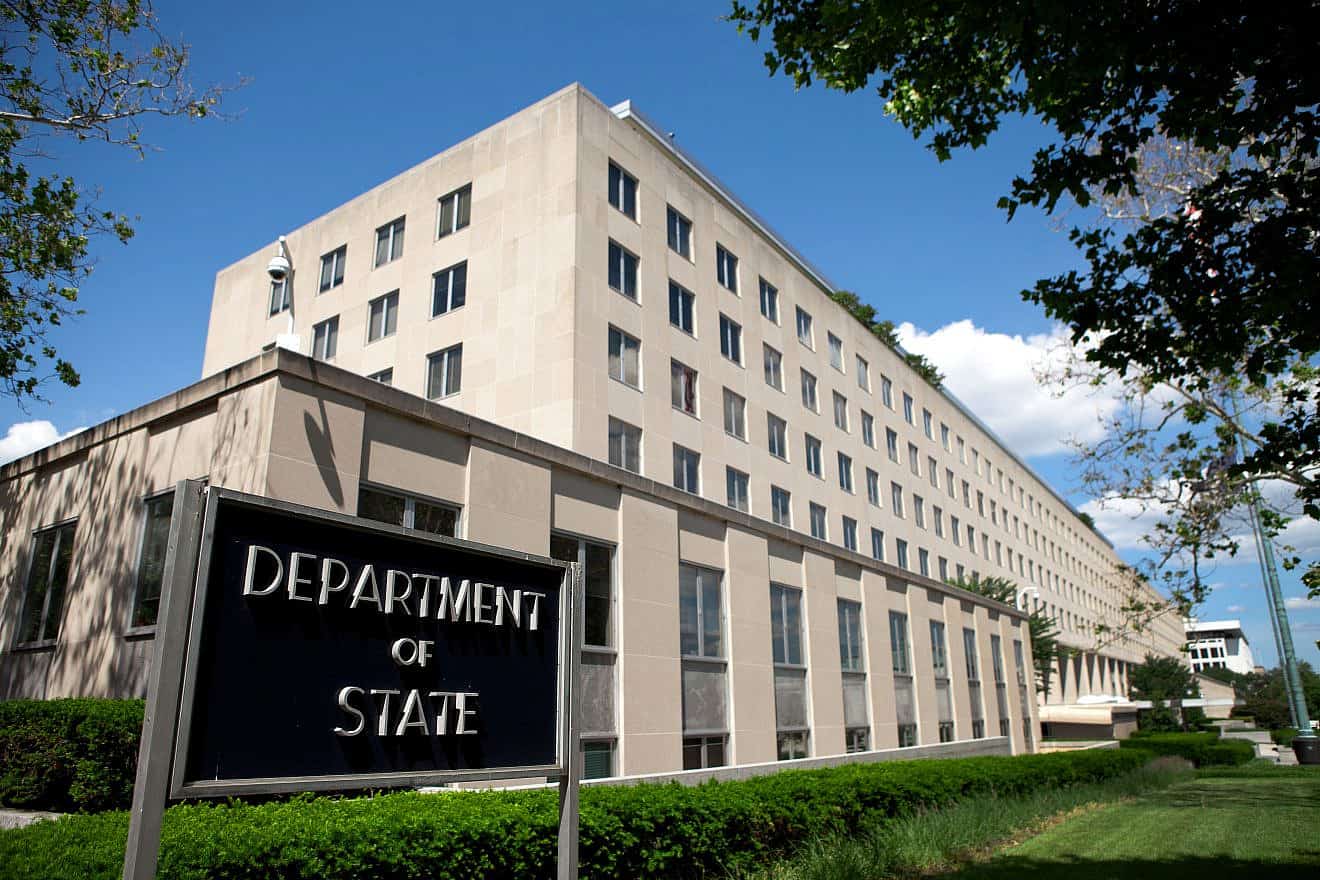













Marco Rubio, Secretary of State
Dylan Johnson, Assistant SecretaryBureau of Global Public Affairs
Via Teleconference
ASSISTANT SECRETARY JOHNSON: To ask a question, please use the “raise your hand” feature. And then once you’re called on, you’ll have to unmute your phone to ask your question. And we will give it a second for people to call in here. Okay. We will start with Gabe Gutierrez of NBC.
QUESTION: Thank you, Mr. Secretary. I appreciate you doing this. With the timing of María Corina Machado’s return, can you say if the U.S. either urged her to return at this time – did it in any way facilitate her return? And then also more of a – on a housekeeping question, how much oil has the U.S. brought in from Venezuela to date since Maduro’s arrest? I know the President has given various numbers, but what is the most updated figure you have on how much oil has come to –
SECRETARY RUBIO: I – yeah, on the oil, I don’t have an updated figure. I mean, what happens is Venezuela is now selling the oil on the global market. Some of it – a lot of it is heavy crude is refined in our refineries in the – in the southern U.S. Some of it is refined in India, which is increasing its intake of it. But it’s basic – here’s what happened before. Venezuelan oil, because it was sanctioned, had to be sold basically at a discount. The Chinese never paid for Venezuelan oil. They would basically take $100 worth of oil and, instead of paying for it in cash, would just credit it against the debt that Venezuela owed them.
In other cases, they had to sell it at deep discounts around the world because of the – what happened after January 3rd was the oil is now being sold at market rate, deposited into the Treasury-controlled account, and then that money is paid on a monthly and biweekly basis via a process that’s been created and placed with the licenses through Treasury. But I don’t know the exact amount that’s been processed through that account. I just don’t know. I mean, energy – I can get you the answer. I just don’t have it in front of me.
On the first part of your question, with María Corina, look, the only time I ever discouraged her, for example – me personally – from going, was right after the earthquake. And the reason why was very simple, because right – at that moment the only thing we were focused on, from a logistical standpoint, was getting as many planes with relief aid as possible into the country. And I said to her right now the only thing we’re focused on – at one point we were running the airport there – is making sure that we can get aid into the country.
So, that’s the only time I said it’s probably not the best time to return, in the midst of a humanitarian calamity, because of the fact that we wanted to make sure that we were getting the planes in there and that the planes were filled, that there would be no impediments to the planes landing or things of this nature. Because all we wanted to do was get first responders and aid into the country as quickly as possible, because they were facing a very real calamity, which it was. It’s probably the worst earthquake of this hemisphere in 50 years, if not longer.
On the issue of what happened yesterday, I – we’re well aware that she wanted to go back. And the only thing I can tell you about “facilitate” is weeks ago – and I mean weeks and weeks ago – we spoke to the interim authorities and just said, look, our expectation is that she’s a Venezuelan, she belongs in her country. That’s the country she’s from. She should be allowed to return, and she should be allowed to return unperturbed, having no problems. And they told us that she could fly into the airport if she wanted to, and we communicated that to her team.
So she chose to – now, I think she’s had some impediments according to them, but that had nothing to do with us. Those were bilateral impediments. Those were countries that didn’t want to be seen – that have their own interests when it comes to Venezuela, for example, and countries that didn’t want to be getting crossways for one reason or another. But from our perspective, weeks and weeks ago they told us that she could go back and she would not be disturbed. And my understanding is when she entered yesterday, and she’s gone through the country, and she had no issues and no problems – no problems getting in and no problems once she’s been in.
ASSISTANT SECRETARY JOHNSON: Great. We’ll take our next question from Ed Wong of The New York Times.
I think you’re on mute, Ed. Hello?
QUESTION: Oh, hi. Okay. I unmuted. Secretary –
SECRETARY RUBIO: You almost lost your turn. You almost lost your turn; you’re lucky. Go ahead.
QUESTION: Thanks; appreciate it. So I wanted to ask about a tension that exists in statements that María Corina has made about the current oil deal. She’s criticized Betancourt. I know that the U.S. sees this oil deal as the best chance for Venezuela to bolster its economy and get revenue into the country. Machado herself has criticized it; she might do that again in the future. She says Betancourt represents the old regime and the oligarchy associated with that. So how do you address that?
SECRETARY RUBIO: Well, first of all, you have to understand the oil deal – the oil deal is just a portion of the overall industry there. This company, NABEP, this blue – whatever, Blue Energy – they control the oil fields that, many of them, the majority of the oil fields they controlled were once being processed or held by Chinese or Russian companies. So we could’ve left it that way, I guess. Or we can decide to enter into this strategic agreement with this company. They’re the single largest private company operating under license in Venezuela, but they are not the totality of Venezuela’s oil industry. There’s plenty of other fields, including the ones Chevron has expanded into, including the ones Exxon is interested in, including the ones that Reliance is interested in, from India.
So it’s – and the deal – what the deal does do, okay, from – is because of the U.S. Government’s involvement, is it now allows the company that we partnered with to go out and make massive capital investments to increase the productive capacity. Understand that because of sanctions and corruption, there’s been very little investment in the capital, in the infrastructure of their energy sector. So they’re underproducing, and a lot of this – they didn’t invest anything in capital. Right, the kleptocracy just stole all the money from it but didn’t really invest anything back in the business.
The fact that they’re in business with us, the fact that they are now partnered with the United States, gives the certainty they need, and they’ve already started doing it, to go out and make massive investments in capital – which they’re doing. Not a penny’s coming from us. We’re not putting a dollar into this. But it’s created the market confidence that they can now go out and raise the money to bring in the capital investment to increase the productive capacity of Venezuela.
The second thing is it speaks to the United States a huge strategic advantage, which is it gives us access to basically a reserve that, in times of crisis or need, we would have access to. Otherwise, it generates revenue, all of which would have to pay royalties to the government.
As far as her criticism of the deal, I mean, that’s fine. I mean, that’s her opinion on it. And eventually – this is a contract that we think is a very solid contract. It’ll ultimately – it’s a deal that is going to have to comply with all the American laws on money laundering and corruption and the U.S. courts and things of that nature. So we feel it’s a very, very solid deal. She doesn’t have to agree with it or like it, but I think that’s separate from the issue of having an election and a democracy.
I think no matter what, once people understand what the deal means, it’s just a portion of the overall energy sector in Venezuela. And whether it was us or the Chinese or the Russians, someone was going to be in business with these people because these are productive fields. So, we think they’re better off being in business with us than somebody else, and it just allows them to be able to quickly invest in the capital necessary to increase the productive capacity of a country that’s been severely underinvested in.
ASSISTANT SECRETARY JOHNSON: All right, we’ll go to Marc Caputo of Axios.
QUESTION: All right. I think I learned how to work this. Can you hear me?
ASSISTANT SECRETARY JOHNSON: We got you.
QUESTION: All right, excellent. How on the level do you think Delcy Rodríguez is here? You’re going to be asking her to essentially give up power a few years early. And then a more micro note, today in her press conference in Caracas, she twice denounced the, quote, “external aggression,” the military-style aggression against Venezuela, clearly referring to the United States. So I’m curious what our trust is – what your trust is – in her.
SECRETARY RUBIO: Well, three things. Number one, your Miami Hurricanes were very vulnerable to Hail Mary passes, just so you know. Number two, as you’ve witnessed the last two weeks, this – I shouldn’t be bragging because the Gators kind of had a couple bad weeks, Marc.
All right, let me go back to your question on Delcy. Yeah, I don’t think Delcy’s ever pronounced herself in favor of the operation that happened on January 3rd. That said, so far this process – how do we judge all this? We ultimately judge it not by rhetoric but by action, okay? And the actions are as follows: We have asked them to do certain things that are in the interest of the national security of the United States, and they have done them – some of which I’m not going to disclose or talk about here, but they’ve done them. I can – suffice it to say that today the influence of Iranians and Cubans in Venezuela is – and others is substantially diminished, if not eliminated.
They’ve – we’ve asked them to go after criminal organizations, and they’ve done it. We’ve asked them to deport individuals wanted by the justice system of the United States, like Alex Saab, and they’ve extradited him, and today he’s pled guilty and is now a cooperating witness in our system. We’ve asked them to make sure that this transition process moves forward, and they’re doing it. I mean, these agreements, they’ve agreed to them. They’ve agreed to the new TSJ. They’ve agreed to this moving forward.
So, I think the question about trust– look, trust is– it’s not based on rhetoric. It’s going to be based on actions. At the end of the day, that’s really what we care about. If at the end of the day we have a new TSJ, a new CNE, a new election, and a new system of government, that’s what we want. And no matter what people say along the way, as long as it happens, this is a results-based process. And so far, frankly, on everything we’ve asked for in this process, be it the economic reforms, the political reforms, it’s happening. And we think that’s good and that’s cooperative, irrespective of the other things that are happening.
The second thing I would say about the– I think your question was about– what was the other part of your question?
Did we mute him? What happened?
ASSISTANT SECRETARY JOHNSON:Can we unmute Marc again, guys?
SECRETARY RUBIO:Well, I think that covered the gist of what he was asking about, right?
ASSISTANT SECRETARY JOHNSON:Okay. We’ll now go to The Wall Street Journal. We’ll do Vera Bergengruen.
QUESTION:All right, can you hear me now?
SECRETARY RUBIO:Yeah.
QUESTION:Okay. Thank you for laying this out. So, you’ve laid out all these conditions that need to be met, obviously, before Venezuela can hold elections. But what prevents the current government from– it’s a lot, and obviously, as you said, it takes a really long time for all of this to kind of fall into place. What prevents the current government from using these requirements to delay elections indefinitely? And how would Washington use its leverage, as you’ve mentioned, to prevent that?
SECRETARY RUBIO:Well, I mean, what prevents them from doing it is the fact that– let me put it to you this way. I think your question really is, well, how do we know that this is not a delay tactic? Like, what if they just try to wait us out for two years? That’s not going to happen. I mean, we have timelines that are agreed to, and so far, they’ve met every one of the timelines. And I say that despite the delay that happened with the earthquake sort of slowing down some of this.
But, I mean, we have very clear expectations, and at the end of the day, Venezuela is still an economy and a country that operates on sanctions, that is still heavily sanctioned. And to the extent they’re able to do business and operate today, it is because we are issuing waivers or general licenses that are allowing certain economic activities to happen. So, the truth be told is the United States has significant influence over the direction that these talks go and the results that we get from them. So, our expectation, I don’t– look, I don’t want to be hostile here because so far they’ve– everything we’ve asked them to do, they’ve done, and they’ve met all the timelines that we’re working on.
If that process doesn’t work out, then we’re back to where we were from the beginning, I suppose, but that’s why this process has to work. And that’s why we don’t want to see– that’s why I made a very clear reference to it yesterday, and that is that everybody should be committed to this process of transition– everybody. That includes the interim authorities. And I have no indication that they do not intend to cooperate with this process that we’ve laid out in terms of how this needs to transition. I don’t know what choice they have because if they don’t cooperate with it, obviously, the United– then it’s the reason why we’ve suspended some of these sanctions. It’s the reason why we’ve allowed certain economic activities to occur. It’s the reason why we’ve done a bunch of the things we’ve done, as an incentive to continue this process moving forward.
But I’m hopeful that they will continue to meet these expectations because, frankly, it’s in their best interest in the long term as well. But, I mean, we’re not going to get– no one’s going to wait us out here. I mean, I recognize the calendar and the time frame and the constraints. I mean, best-case scenario, I’m in this job for two more years and two months. So, I clearly intend to see this thing well in advance of the time I leave this position, or positions. So we’re very committed to that, and I feel very optimistic that we’re going to meet those timelines and bring us to where we need to be.
ASSISTANT SECRETARY JOHNSON:All right. And we’ll take our last question from Olivia Gazis of CBS. I think you’re on mute.
QUESTION:Can you hear me?
SECRETARY RUBIO:Yes.
ASSISTANT SECRETARY JOHNSON:We got you.
QUESTION:Okay, thank you. Thank you, Mr. Secretary. Just to drill down on what you’ve just said, in addition to the asks and expectations, have Delcy and Jorge been offered any incentives by the U.S. to facilitate a transition, including immunity from prosecution?
And if I may, since it’s the last call, on Cuba and the messaging there where you’re also pushing for political change, why are you urging the Cubans to work with the CIA rather than organize peacefully? What are you asking them to do? Thank you.
SECRETARY RUBIO:Yeah, I’m not going to answer the second question, unfortunately. I’m just– I can’t answer that other than to say that we think Cuba needs very dramatic change, and the direction – I mean, it’s a totally different case from Venezuela, looks very different. And I’ll leave it at that, unfortunately, on the second point.
On your first point, no, there’s definitely no talk about prosecutions or anything of this nature. It’s very simple, okay? Venezuela has two choices. There’s only two choices right now for Venezuela, and I would say this is true for everybody involved, okay? I’m not just speaking now about Delcy and Jorge or any of these other people on the– in the interim government, and I’m not speaking about the opposition. I’m just speaking for everybody. Venezuela has two options here.
Option one is to truly enter into a period of both reconciliation and reformation so that they can have elections that result not just in a democratically elected government but an enduring republic. And that gives them the opportunity to prosper economically and be a country that, once again, is a place where the economy’s prospering, the people are happy, and 7 million people don’t have to flee, and many of them can actually come back and live in their country again. That’s option A. And the only process that gets us there is the process we are on right now. Okay?
I witnessed for 15 years and I supported all of these movements– the street protests, the marches, the taking on the water cannons, the political prisoners going in, the sanctioning – all of that. I mean, this – I’ve been involved in this issue of Venezuela since 2014, so I’ve watched every iteration of it: the failed attempt in the Trump 1 administration to get an internal rebellion. By the way, that was supposed to be led by the head of the transitional – of the TSJ at that – Maikel Moreno at the time, that ended up not working. I’ve watched all of these things move forward. And you’re not going to street-protest your way into a democracy. It’s just not – the way you do it peacefully is through a process, and it’s the one we’ve set up. And if this process doesn’t work, then the alternative is going to be worse. The alternative is going to be either violence and armed conflict within the country, or back to the way things have been for the last 20 years, which have not been good for the people of Venezuela.
So from our point of view, whether – this is the only process, it’s the only game in town. This process has to work. And if it – and if it fails, then I think – guys, in the end, my interest here is ensuring that Venezuela can have a functioning republic with a system of laws where there’s an opposition but there’s also a majority party; people every four years go vote, or five years, or three years, whatever they decide – they go vote for a new National Assembly, for new presidents, they change back and forth, like it is in multiple countries throughout the region; and an economy that has an opportunity to succeed so that not only do the people that live there now be able to continue to live there, but 6 or 7 million people that were forced to flee the country will be able to go back to their country. A lot of them want to go back and be in Venezuela again, and they’re scattered all over the world. And I want all that to happen without bloodshed. I want all that to happen without civil war. I want all that to happen without getting back into an endless cycle of sanctions and threats and back and forth. And we’re trying to give that process a chance to work, and this is the closest we’ve ever been.
And the difference between this process and what the Biden administration negotiated is they made a bunch of front-end concessions that were irreversible – we’ve made no irreversible concessions – and they allowed the elections to move forward using the current infrastructure, which was designed by the Maduro regime to rig elections. So, that infrastructure has to be replaced in order for these elections to be valid. How can you have a legitimate election in Venezuela when the Electoral Council is controlled by people loyal to one side, with the power to decide that certain so-and-so can’t run for election, so they can’t be on the ballot? How can you have a legitimate election in Venezuela when you have a supreme court that is fully politicized and is going to rule that anything the regime wants is legal and allowed to do? You’ve got to change the infrastructure of the elections – not in 10 years, not in five years, not in two years; it needs to happen quickly under the timelines that we’ve established. And I think we’re making real progress in that regard. But if anybody tries to derail that process, they’re doing great harm to Venezuela, who no matter – if that’s the interim authorities that try to do harm to this process or stop complying, then we’re going to have a problem. But I don’t expect that. I really, really don’t. But, like I said, we’re going to be on top of it because it’s a priority.
ASSISTANT SECRETARY JOHNSON: All right, thank you, Mr. Secretary, and thanks to everyone for dialing in. If you have any additional questions regarding today’s call, you can send them to the Department’s media inquiry system at state.gov/newsroom. Thank you. This concludes today’s call.
The post Secretary of State Marco Rubio on Venezuela appeared first on U.S. Department of State