






































Clausewitz wrote that war is the continuation of policy by other means. The corollary—which Washington perpetually forgets—is that diplomacy without strategic clarity is just theater. This weekend in Islamabad, we got the theater.
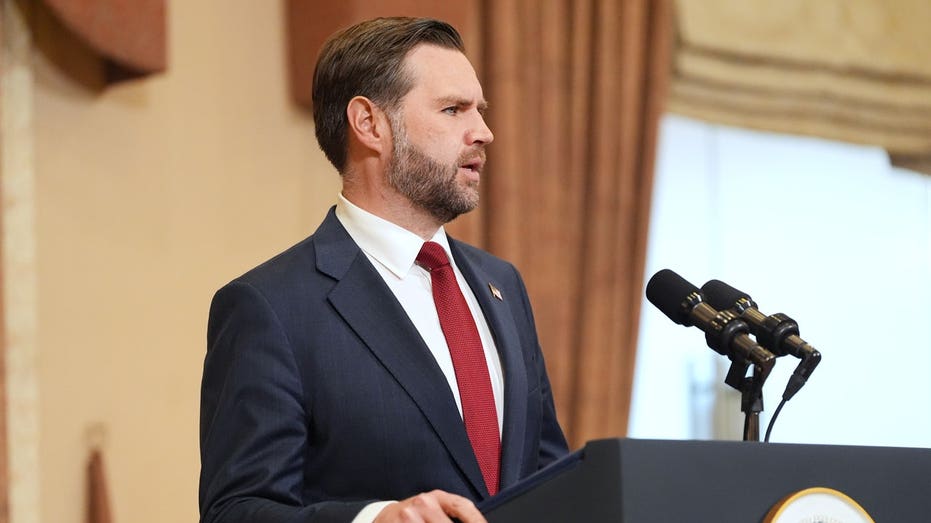
Vice President JD Vance flew to Pakistan to lead the highest-level direct talks between the United States and Iran since the 1979 Islamic Revolution. He had warned Tehran before departing: "If they're going to try to play us, they're going to find the negotiating team is not that receptive." After 21 hours across multiple sessions, he boarded Air Force Two and flew home without an agreement, leaving behind what he called Washington's "final and best offer." Tehran has not accepted it.
Tehran's delegation—71 people, led by Parliamentary Speaker Mohammad Bagher Ghalibaf and Foreign Minister Abbas Araghchi—presented four non-negotiable conditions before the session even began: full Iranian sovereignty over the Strait of Hormuz, complete war reparations, unconditional release of frozen assets and a durable ceasefire across the entire West Asia region. Those are not opening bids. They are a declaration of intent. Iran's state media put the breakdown squarely on Washington's "excessive demands."
GEN JACK KEANE 'SKEPTICAL' THAT IRAN CEASEFIRE WILL HOLD, WARNS TEHRAN WILL 'DELAY AND OBFUSCATE'
Ghalibaf left no doubt about the atmosphere. "We have goodwill, but we do not trust," he told Iranian state media. The distrust is mutual: Tehran has not forgotten that President Donald Trump walked away from the 2015 nuclear deal, and Washington has watched Iran exploit diplomatic pauses for decades.
The American framework was equally firm. Trump's proposal calls for Iran to surrender its highly enriched uranium, accept caps on its defense capabilities and fully reopen the strait. The president was blunt: "No nuclear weapon. That's 99% of it." Vance confirmed after the breakdown: "The simple fact is that we need to see an affirmative commitment that they will not seek a nuclear weapon—not just now, not just two years from now, but for the long term. We haven't seen that yet." These two sides were not negotiating the same deal. They were not even negotiating whether a deal is possible.
The entire framework rested on one condition: Iran would reopen the Strait of Hormuz. Six weeks into this war, that passage—through which roughly 20% of the world's oil and liquefied natural gas moves—remains effectively closed to normal commerce. During the talks, the IRGC warned that any military vessels attempting to transit would meet a "strong response." Two U.S. Navy guided-missile destroyers conducted operations in the strait on Saturday—the first American warship transit since the war began.
Trump was direct: "We're sweeping the strait. Whether we make a deal or not makes no difference to me." Two parties asserting irreconcilable positions over the same 21 miles of water is not a negotiating gap—it is a trigger.
ONE MONTH AT WAR WITH IRAN — CAN WASHINGTON DEFINE VICTORY?
Iran insisted the ceasefire cover Hezbollah in Lebanon. Washington and Jerusalem said it does not. Israeli strikes killed at least 10 people in southern Lebanon on Saturday—on the same day the delegations were meeting at the Serena Hotel in Islamabad. Tehran called them a ceasefire violation.
Israel was not represented in Islamabad—Pakistan does not recognize it. The structural problem is insoluble: Iran cannot deliver any agreement that leaves Hezbollah exposed to ongoing Israeli bombardment, and Washington cannot bind a sovereign Israel to terms Jerusalem did not negotiate.
VANCE WARNS IRAN WILL 'FIND OUT' TRUMP IS 'NOT ONE TO MESS AROUND' IF CEASEFIRE DEAL FALLS APART
One thread remains open: Lebanese and Israeli diplomats are set to meet separately at the State Department. If that track moves, it could remove the Lebanon veto from the larger negotiation.
This outcome is not a surprise. From Vienna to Geneva, Iran's consistent strategy is to use the table to buy time, preserve leverage and avoid commitments that weaken the regime. The regime absorbed weeks of U.S.-Israeli strikes, retained internal control and sent 71 negotiators to Islamabad with a maximalist demand sheet—not a delegation on the brink, but one that believes time is on its side. Former State Department negotiator Aaron David Miller read the room clearly: Iran "holds more cards than the Americans" and is "clearly in no hurry to make concessions."
One development suggests the pressure is real. Saudi Arabia's finance minister arrived in Islamabad as a show of economic support—Gulf states do not send ministers to symbolically back a negotiation they expect to fail.
Concession—accepting Iranian Hormuz sovereignty, force drawdowns, proxy networks and nuclear program intact—reads as abandonment in every Gulf capital that depends on American security guarantees. Full escalation can destroy Iranian military capacity but cannot remove the regime or govern what follows; Vietnam and Afghanistan proved airpower compels, it does not govern. Coercive pressure sustained over time—maximum economic isolation, naval enforcement, coalition discipline—remains the most coherent path, but it demands patience measured in years, not news cycles. None of these options are clean. All of them were foreseeable.
WHY TRUMP, IRAN SEEM LIGHT-YEARS APART ON ANY POSSIBLE DEAL TO END THE WAR
Islamabad is over. The ceasefire is in limbo. Vance left Tehran a "final and best offer" and departed. It has not been accepted, and future talks are uncertain.
Washington has yet to define what a durable settlement requires—only what it will not accept. That is not a strategy. If the ceasefire collapses without a diplomatic track to replace it, pressure to resume strikes will build fast. But more bombs will not force Iran to surrender. The logic of sustained escalation leads to one place: a large-scale ground war.
Iran is not Iraq. Iraq favored maneuver warfare across open terrain. Iran is mountainous, with limited mobility corridors. Naval power is largely irrelevant. Ground forces would have to grind through prepared defenses at enormous cost in lives and treasure—and the American people are not prepared for that war.
Clausewitz again: no one starts a war without being clear in his own mind what he intends to achieve by it. Six weeks in, that clarity is still missing from Washington's public posture. I warned that Iran is too dangerous to ignore, too resilient to collapse quickly and too complex to resolve from the air. Islamabad confirmed that assessment.
CLICK HERE TO READ MORE FROM BOB MAGINNIS
The post ROBERT MAGINNIS: Why Islamabad talks were always doomed to fail appeared first on FOX News