








































Fox & Friends has officially launched Wellness Week, a dedicated series aimed at navigating the world of social media health trends.
"The internet is jam-packed with millions of these trends that are promising you a healthier, younger and more energized life. But it's hard to tell what's a real hack or just hype," said host Kayleigh McEnany.
To find out, the team traveled to downtown New York City to experience popular treatments firsthand, specifically focusing on the science behind red light therapy and the intense contrast of hot and cold plunges.
CAN RED LIGHT THERAPY IMPROVE YOUR SKIN? DERMATOLOGISTS SHARE BENEFITS AND TIPS
The investigation began at La Reserve Esthetics and Wellness, where the team explored red light therapy.
Describing the process, one spa employee said, "The way that it works for our body is we're able to absorb the heat and the warmth from those red-light therapy light bulbs and give our body the space to help with recovery, help with cell production."
The treatment is marketed for helping with inflammation, muscle recovery, weight loss, anti-aging and collagen production.
While McEnany compared the experience to a tanning bed in terms of warmth, it was noted as being "much safer" than traditional UV exposure.
TEST YOURSELF WITH OUR LATEST LIFESTYLE QUIZ
Fox News senior medical analyst Dr. Marc Siegel clarified that the devices use LED light, which is "close to infrared light" but remains visible and safer than sunlight.
Consistent use can "promote healing of the skin and more collagen," according to Siegel, though he cautioned that it might be three or four weeks of usage before users notice a visible impact.
Next, the team tested out hot and cold therapies.
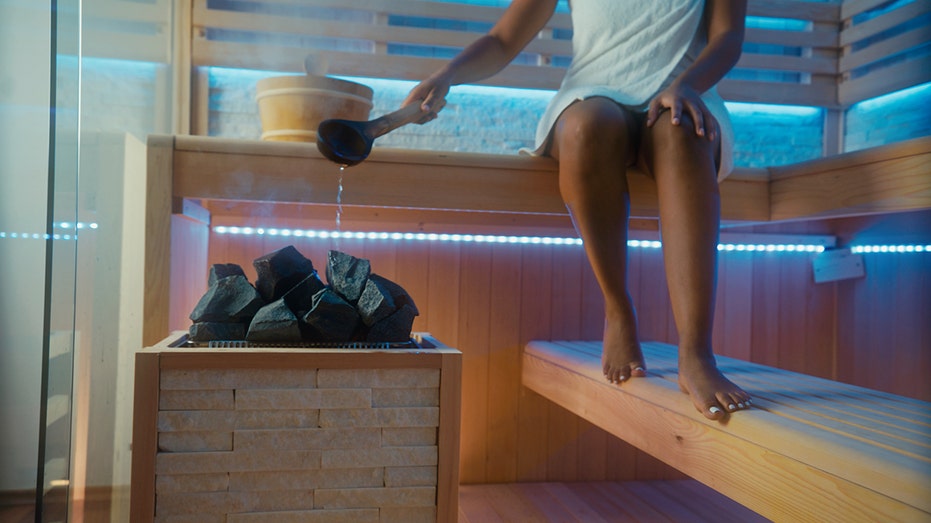
Adam Klotz started in a 190-degree Fahrenheit sauna for 15 to 20 minutes to build up a stress response, which was immediately followed by a plunge into an ice bath with water temperatures between 46 and 48 degrees.
The physical reaction to the cold was intense, described as an "immediate stress response" that requires breathing through the shock.
Klotz described the aftermath as "a rush" and "definitely a shot of life."
CLICK HERE FOR MORE HEALTH STORIES
"It clears your mind and ... really improves my mental mood," he said.
Siegel cited a long-term study from Finland that showed this practice "decreases mortality (death rate) by about 40% to 50%" when used regularly.
CLICK HERE TO SIGN UP FOR OUR HEALTH NEWSLETTER
However, the doctor issued a warning regarding the cold plunge, advising that "you better make sure you're in good shape" before attempting it.
While the contrast helps circulation and metabolism, "I want it to be people who have seen their doctor first and know that their heart is in good shape," Siegel advised.
The team reminded viewers that while many of these trends show promise, especially for muscle recovery and inflammation, professional medical advice should always be the first step before diving into extreme temperature therapies.
Wellness Week will continue to explore other modern fads, including IV drips, wearable tech and sensory deprivation tanks.
The post Do red light therapy and cold plunges really work? A doctor reveals the truth appeared first on FOX News