











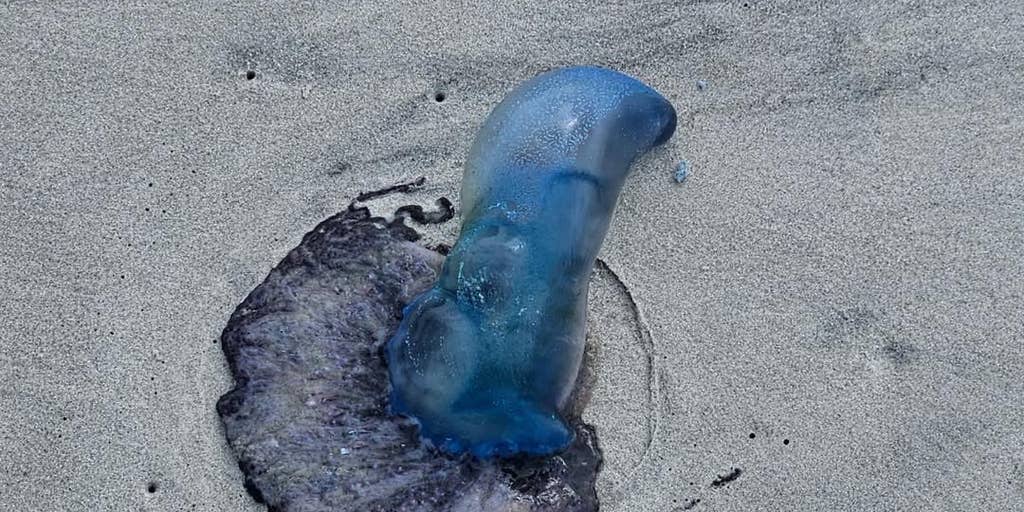





















MYRTLE BEACH, S.C. — Officials with the Myrtle Beach Police Department are advising beachgoers to be on the lookout, as strong currents are washing marine vegetation and venomous wildlife ashore—including the potential for the Portuguese man o’ war.
SPRING STING: PORTUGUESE MAN O' WAR RETURNS TO GULF COAST BEACHES
The department took to Facebook regarding the recent ocean current activity, sharing a picture of the painful stinger and warning that the water is not the only place to be alert, as these creatures can still send a nasty zap on shore.
"If someone is stung, remove the tentacles as quickly as possible, and put vinegar on the affected area to deactivate the stinging cells," they said.
Since the Portuguese man o' war is mostly found in tropical and subtropical seas, these species typically wash ashore along the Gulf Coast and U.S. Southeast coast.
WOMAN KILLED BY FLYING UMBRELLA WHILE DINING OUTDOORS AT SOUTH CAROLINA RESTAURANT
The species is a highly venomous and very closely related to a jellyfish that floats like a blue, violet or pink-colored balloon atop the ocean surface.
While rarely fatal to humans, a man o' war sting leaves painful, burning welts on exposed skin.
Most recently, these dangerous creatures were spotted from Florida to Texas in early April, including an incident where a young boy was stung on Galveston Island.
Krysti Griffith and her family were vacationing on the island when her 3-year-old son picked up a dried-up man o' war, not knowing exactly what he had just set into motion.
Roughly 30 seconds later, the young boy was in agonizing pain.
The family rushed him to hospital, where he was treated with a "jellyfish paste" made up of vinegar, meat tenderizer and lidocaine, which caused the pain to subside.
Now that venomous wildlife has been washing ashore in Myrtle Beach, officials are advising all beachgoers to stay alert, monitor their surroundings and seek assistance if stung.
The post Portuguese man o' war warnings issued in Myrtle Beach after strong currents wash venomous wildlife ashore appeared first on Fox Weather