
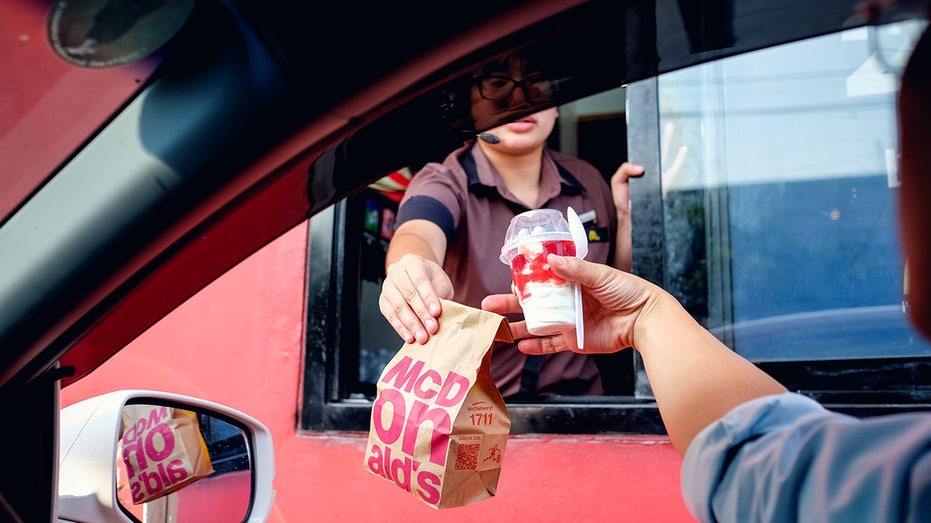













Ask most Americans who owns the McDonald's on the corner, the Holiday Inn off the interstate, or the gym down the street, and they'll tell you it's a big corporation. They're wrong. Most of those businesses are owned by local entrepreneurs who put their own savings on the line, sign the lease, make the payroll, and live in the town they serve. There are roughly 832,000 of these franchise small businesses in America, and together they support about nine million jobs.
Yet for more than a decade, Washington hasn't been able to answer a simple question for them: Who is the employer?
The answer has flipped with every change in administration. In 2015, the Obama labor board's Browning-Ferris decision blew up decades of precedent and said a parent brand could be on the hook for a franchisee's workers based on "indirect" or even unused control. A 2020 rule restored common sense. In 2023, the Biden board went further than Browning-Ferris, declaring that merely reserving the right to control was enough, before a federal court struck that rule down. The standard has now changed four times since 2015, and another court case could change it again in the next few months. No small-business owner can plan a five-year expansion around a rule that changes every four.
CHICK-FIL-A IS ONE OF AMERICA'S TOUGHEST FRANCHISES, AND THE STARTUP COST MAY SHOCK YOU
This isn't an abstract legal fight. When the International Franchise Association and the U.S. Chamber of Commerce studied the damage from the expanded standard, they found it cost the economy $33.3 billion a year, led to as many as 376,000 fewer job opportunities, and drove a 93% increase in lawsuits against franchise businesses. Ninety-two percent of the brands and owners surveyed said the rule meant less support from their brand.
That last number is the one that should bother Congress most. Under a sprawling joint-employer test, every bit of help a franchisor gives — a training program, an HR template, a workplace-safety manual — becomes evidence that it is really the boss. So the brands pull back. The national company with the lawyers and the compliance staff protects itself. The owner of three sandwich shops is left on her own. A rule sold as protecting workers ends up kneecapping the small employers who hire them.
The fix is sitting in front of Congress right now. The American Franchise Act (H.R. 5267 / S. 3525) writes one permanent, franchise-specific standard into federal law under both the National Labor Relations Act and the Fair Labor Standards Act. A franchisor would be a joint employer only if it both possesses and exercises substantial, direct, and immediate control over essential terms of employment like wages, hiring, and scheduling. Setting brand standards, offering training, or requiring safety qualifications would not, by themselves, make a franchisor the employer. That is how franchising worked for most of its history, and it is how it should work.
Most important, it would be the law — not a board decision that the next administration can toss out on a party-line vote.
This is that rarest of things in Washington: a genuinely bipartisan bill. It was introduced by seven Republicans and seven Democrats. It has 158 cosponsors in the House, cleared the House Education and Workforce Committee in July, and has the backing of the White House. Members like Rep. Kevin Hern of Oklahoma, who owned and operated McDonald's restaurants before he came to Congress, understand from the inside what it means to meet a payroll under rules that won't sit still.
REP ROGER WILLIAMS: 250 YEARS OF HARD WORK PAYS OFF FOR MAIN STREET BUSINESSES
At Unleash Prosperity Now, our new paper, "Nine Million Jobs at Stake: Why Franchising Needs Regulatory Certainty," lays out what's on the line. One in eight American businesses with at least one employee is a franchise, and nearly two-thirds of local franchise owners are first-time business owners. This year alone, franchising is projected to create more than 150,000 new jobs. The conclusion is plain: Clarity is the cheapest pro-growth policy Congress can pass. It would also lift a compliance headache off small-business owners and free them to keep prices down at a moment when Americans have made clear that affordability is what they care about most. It doesn't cost the Treasury a dime, and it lets hundreds of thousands of small employers get back to hiring.
CLICK HERE FOR MORE FOX NEWS OPINION
The clock matters. If the American Franchise Act doesn't pass before this Congress adjourns, it dies, and the whole process starts over, with a future labor board free to swing the pendulum back again. Franchise owners have already spent 10 years in limbo. They shouldn't be made to wait for another election cycle.
The lame-duck session is usually remembered for what Congress fails to do. Here's a chance to do something useful for Main Street before Christmas. Pass the American Franchise Act.
CLICK HERE TO READ MORE FROM STEVE MOORE
The post Nine million jobs are in limbo, and Congress can fix it before Christmas appeared first on FOX News