







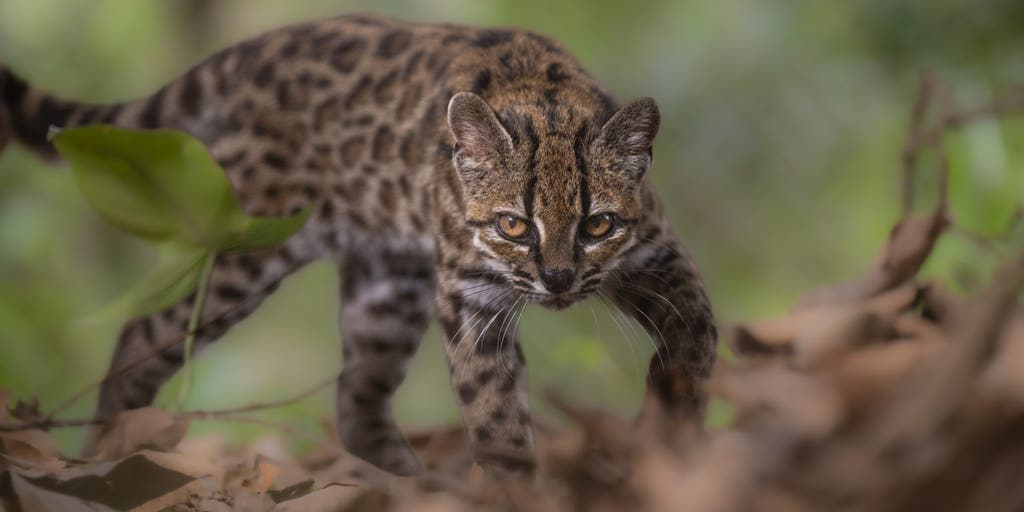













BOLIVIA - A new species of wild cat has been discovered by researchers for the first time in over a century.
The 10-year-old male, Leopardus tilcayo, otherwise known as the tilcayo tiger cat, is smaller than a typical house cat and lives in Bolivia’s Yungas Forest ecoregion, which is located on the eastern slope of the Andes Mountains.
BOBCAT CAUGHT USING A DOG BED INSIDE AN ARIZONA HOME
It’s described as slender, covered in leopard-like spots, with short, rounded ears and long whiskers.
The animal weighs about three pounds and is 18 inches from head to end of body, according to a study published in the journal, Current Biology, on Thursday.
The size of the Leopardus tilcayo population is not clear, the study said.
The cat species was discovered in 2016 after a man found it as a kitten in Bolivia on the side of the road, near a forest. The man lived with the animal for a year, believing it to be a domesticated kitten. He realized that it was wild and gave it to a local wildlife sanctuary, according to researchers.
VIDEO: COYOTE AND BOBCAT CAUGHT PLAYING TAG ON TEXAS DOORBELL CAM
A biologist and National Geographic explorer, Paola Nogales-Ascarrunz, was alerted about the "weird cat" and began investigating the species. The animal turned out to be completely new to science.
Nogales-Ascarrunz, a co-author of the study, did genetic testing of the tiger cat, using tissue from the Brazil tiger cat and a second animal that turned up at Senda Verde.
The results proved that the two cats were unique and came from the same species, which came from other tiger cat lineages about 1.4 million years ago. This was enough evidence to consider the Leopardus tilcayo a new species, according to the study.
Researchers analyzed the genomes of 38 tiger cats in the Leopardus genus, collecting modern blood and tissue samples, gathering DNA from eight museum specimens and sampling cats from regions such as the Guiana Shield in Venezuela, Brazil, Peru and other locations.
SEE IT: NEWLY DISCOVERED GOLF BALL-SIZED BLUE OCTOPUS FOUND OFF COAST OF GALÁPAGOS ISLANDS
By comparing DNA from living tiger cats with genetic material preserved in museums, researchers uncovered hidden differences among the species.
They used these whole-genome comparisons to build an evolutionary tree and determine how closely related the various tiger cats are, according to the study.
The results of these tests revealed that the tiger cat contains genes of five distinct species, separated into genetically separate groups known as:
As a result of these tests, experts discovered the new cat species.
GLOWING BLUE SPIDER AMONG DOZENS OF UNKNOWN SPECIES DISCOVERED IN UNCHARTED ANGOLA HIGHLANDS
While this species is new to science, it isn’t new to the local communities in Bolivia, which have been aware of it for generations. In fact, its name comes from the Bolivian community.
According to researchers, the community suggested the cat be known as Leopardus tilcayo, in honor of the word the local people know it by.
When the Bolivian residents were questioned about the name, they stated that they didn’t know why they called it tilcayo, but it’s been known as such for generations. The name doesn’t appear to mean anything in the Bolivian native language.
The research helps scientists understand how species evolve and become genetically different as they adapt to their environments. It could also help them better assess each population’s risk of extinction, protect important habitats and develop more effective conservation plans.
The post New wild cat species discovered after hiding in plain sight for more than a century appeared first on Fox Weather