



- In 2025, Mormonism was at the center of mainstream popular culture.
- Reality shows, along with brands like Swig and Crumbl, have spread Mormon-influenced trends.
- Mormon aesthetics and community appeal to young Americans seeking structure and a sense of connection.
What do half-and-half-infused Dr. Pepper, group ketamine therapy, and a swinging scandal have in common?
They're all part of the new strain of Mormon mania sweeping American culture. When I asked "Real Housewives of Salt Lake City" star Heather Gay about the phenomenon last week, she called it "undeniable and crazy."
"I just think that the Mormon moment is because we're taking over, we're industrial, we're enterprising," Gay said.
Heather Gay (center) speaks with castmates Bronwyn Newport (left) and Whitney Rose (right) on the "Real Housewives of Salt Lake City."
: Fred Hayes/Bravo via Getty Images
Two percent of the US population self-identifies as members of the Church of Latter-day Saints, but they've dominated our screens and conversations in 2025 like never before, from "Dancing With The Stars" to the heated discourse around influencers like Hannah Neeleman.
It's a phenomenon that's complicated for the church itself, which pointed Business Insider to a 2024 commentary post titled "When Entertainment Media Distorts Faith."
"The Church of Jesus Christ of Latter-day Saints, like other prominent global faith communities, often finds itself the focus of the attention of the entertainment industry," the church wrote in its commentary. "Some portrayals are fair and accurate, but others resort to stereotypes or gross misrepresentations that are in poor taste and have real-life consequences for people of faith."
Indeed, social media and reality TV can't represent an entire religion, but the small window they provide into the culture has an undeniable appeal. The curated aesthetics, tight-knit families, and entrepreneurial spirit that shine through our screens are scratching an itch for lonely, sober-curious, and economically anxious young Americans. As we look ahead to 2026, forecasts predict more of the same: a frozen job market, elevated inflation, and high housing costs.
<script type="text/javascript" defer="" src="https://datawrapper.dwcdn.net/SN7YA/embed.js" charset="utf-8" data-target="#datawrapper-vis-SN7YA"></script><noscript>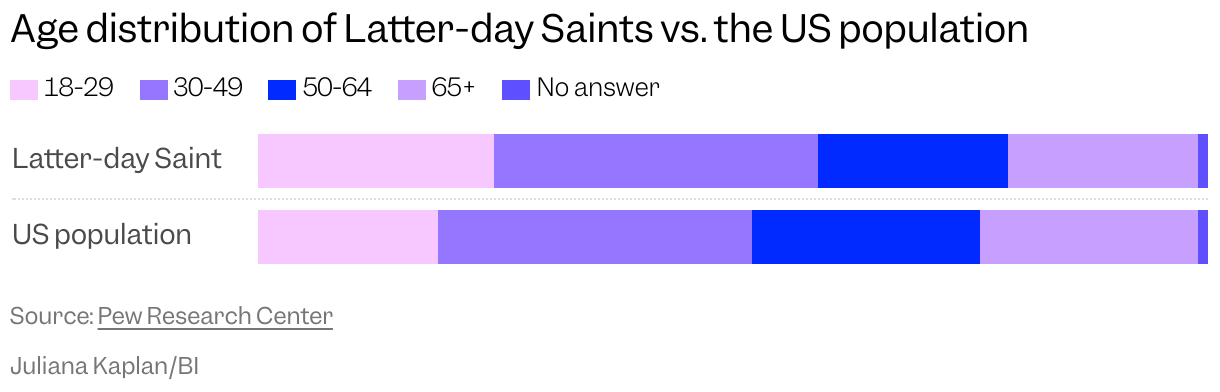 </noscript>
"I think there is a willingness to embrace Mormon culture from the outside in a way that did not exist 10, 15 years ago," said Talia Burnside, a philosophy and religious studies lecturer at Morgan State University.
"It's the perfect storm of social and political awareness, social media, and this trad wife tradition," said Gay, who has left the church and documented her separation in books and a new docuseries. "The swing of the whole nation to something that Mormonism exhibits so well — life that seems perfect, and I think people are longing for that."
Dirty sodas, giant cookies, and communal aesthetics as a cure for loneliness
It's a familiar scene in the reality TV blockbuster "The Secret Lives of Mormon Wives," which is popularly known for a swinging scandal, interpersonal hair drama, and ketamine therapy sessions. Utah-based cast members — picture-perfect influencers who frequently collaborate as a group known as Momtok — meet up for "dirty sodas," gossip, and advice.
Jessi Ngatikaura and Whitney Leavitt attend The Secret Lives of Mormon Wives x Club Soda takeover.
Alan Chapman/Dave Benett/Getty Images for Disney+
The distinctly Mormon treat — a soft drink flavored with syrups, creamers, fruits, sugars, and all sorts of other combinations — is gaining popularity nationwide. On a recent chilly December day, I took my own crew of coworkers to do the same in New York City, at a chain called Cool Sips. One coworker got a Dr. Pepper with coconut, half-and-half, and lime. They said they could see it as a feasible alternative to their coffee habit, which is fitting: Dirty sodas have been called the Starbucks for Mormons, who do not generally drink coffee. The sodas have also broken out from Mormon strongholds like Utah and Arizona. Quick-service industry publication QSR reported in October that original dirty soda brand Swig's revenue increased by 39% for the year, and the company is looking to expand its franchise presence further across the country. In a statement, the privately held Utah-based beverage maker said that it has grown to over 140 locations across 16 states, with a larger share of those outside Utah.
A Swig spokesperson said that the company welcomes and serves "people from all walks of life," and that "where there is or isn't a certain cultural or religious presence doesn't factor into our growth strategy."
Crumbl cookies, which was founded in Utah and whose creators have LDS roots, has launched collaborations with celebrities like Jimmy Fallon and Olivia Rodrigo. Crumbl told Business Insider in a statement that as a global company, it's committed to inclusion. The privately held company also still honors its Utah roots.
"We also support our employees by remaining closed on Sundays to allow time away from work," it said. "Our growth has been driven by innovation, strong customer engagement, and the enthusiasm of our fans around the world."
The influencers hitting up businesses like Swig and Crumbl might also signify something Americans are craving — friend circles congregating around places to go that are not work, school, or a bar. Young Americans are drinking less and spending more time alone. They have fewer close friends than past generations. The appeal of a collective of friends and neighbors who — despite dramatic ups and downs — show up as a village, share cookies, and offer structure is even stronger right now.
<script type="text/javascript" defer="" src="https://datawrapper.dwcdn.net/Kko1i/embed.js" charset="utf-8" data-target="#datawrapper-vis-Kko1i"></script><noscript>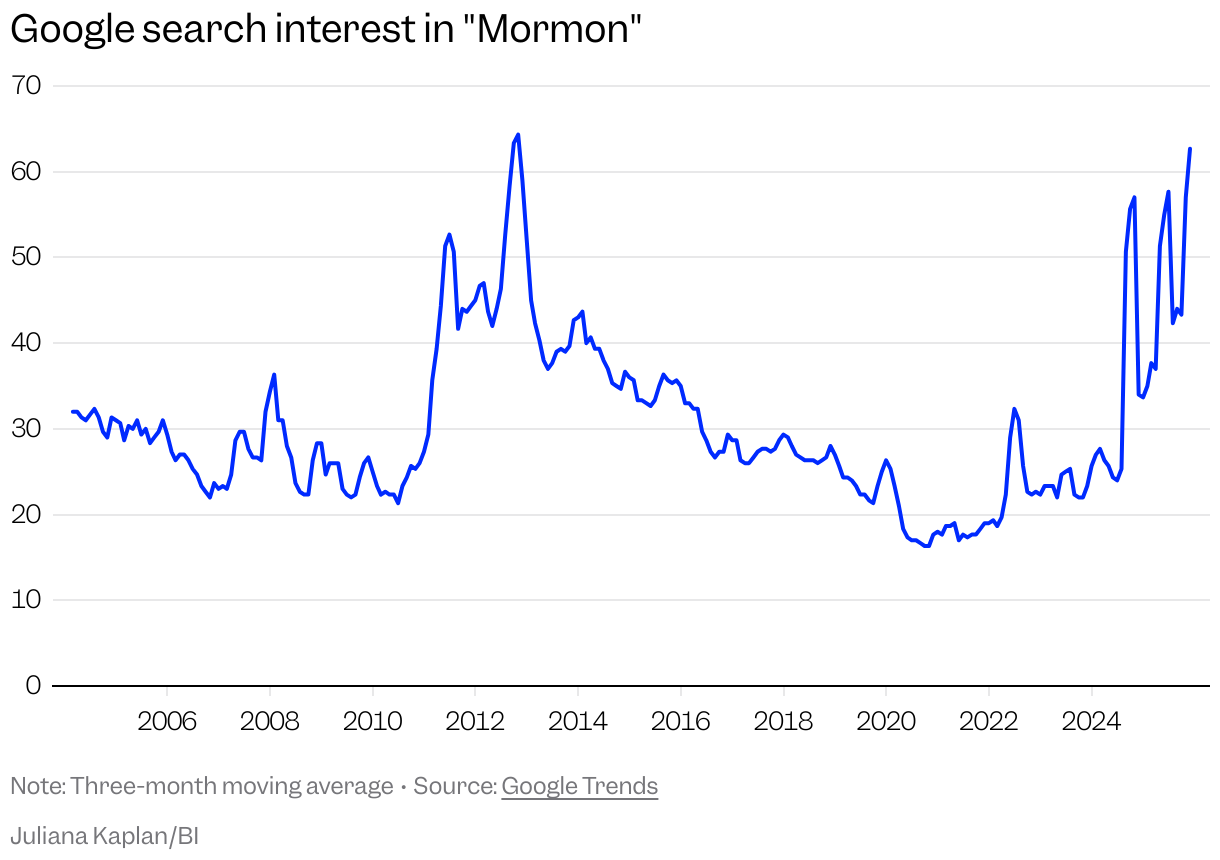 </noscript>
"Even people who are not trying to necessarily embrace the kind of heteronormativity and patriarchal notions of the church are interested in the aesthetics of it and the community of it in having a built-in structure that enables them to have third spaces," said Morgan State's Burnside.
For the most part, famous Mormons of today don't necessarily use their platforms to focus on the religion. A good number of the cast members on shows like "Secret Lives of Mormon Wives" are no longer practicing, and they have varying levels of adherence to doctrines that forbid coffee, alcohol, divorce, and premarital sex.
Instead, young, Mormon-adjacent influencers like Nara Smith and Hannah Neeleman are all about the lifestyle. They offer a more appealing glimpse into LDS culture than previous pop culture moments, such as Mitt Romney's presidential bid, the "The Book of Mormon" musical, and even the first Sherlock Holmes story in 1887.
People are drawn toward what Margaret Toscano, a classics professor at the University of Utah, describes as an alternative that still fits within American cultural norms. In a time of high inflation, white-collar layoffs, and concerns about what an AI-driven world will bring, go-getters who run their own show — homemakers, influencers, writers, or business owners — are aspirational for many Americans.
"Mormon women have always had a sort of entrepreneurial aspect that even if they were stay-at-home moms, they would think of ways in which they could supplement the income of their family," said Toscano, who was excommunicated from the church for her writings on Mormon feminism.
Mormon wife Taylor Frankie Paul will be the next "Bachelorette."
Michael Kirchoff/Disney via Getty Images
Next year is shaping up for more Mormon mania. Whitney Leavitt, one of the "Mormon wives," has cultivated such a large fan base that she was cast on season 34 of "Dancing With The Stars," and landed roles in the Broadway production of "Chicago" and in a rom-com. She'll now be headlining a show just down the block from where the satirical "Book of Mormon" musical is still running.
At the same time, Leavitt's castmate Taylor Frankie Paul is set to helm ABC's "The Bachelorette," casting a Mormon as one of the country's most prominent eligible women.
"It's belonging, it's structure, it's comforting," Gay said of the appeal of Mormon influence. "It's like the new Norman Rockwell in many ways because it's this version of consumerism and America that we are drawn to."
The post Why the time is ripe for Mormon mania appeared first on Business Insider