









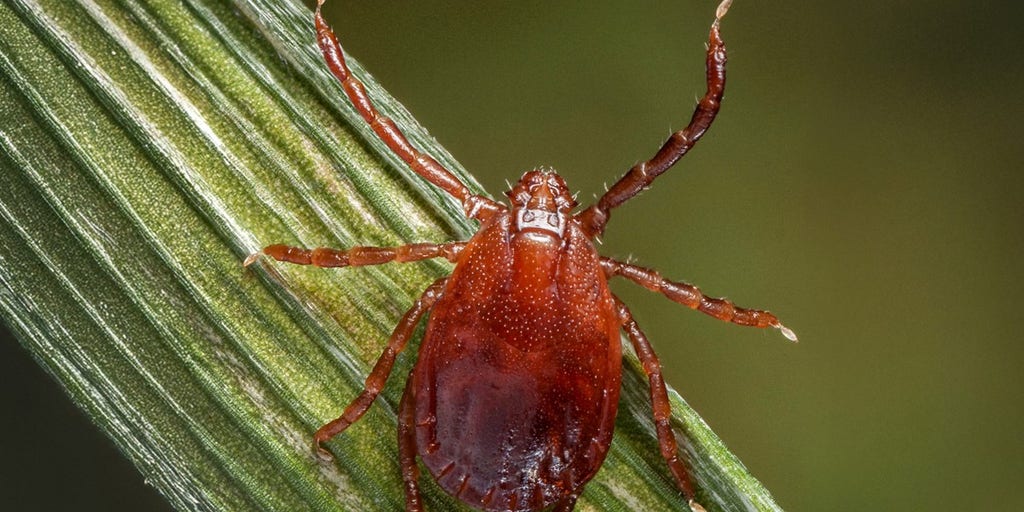





















As millions of Americans head outdoors for Fourth of July celebrations, health experts are reminding people not to forget about ticks, as tickborne diseases continue to rise across the U.S.
DEADLY TICK-BORNE DISEASE THAT CAN CAUSE BRAIN DAMAGE SPREADING ACROSS THE US
According to the U.S. Department of Agriculture (USDA), tickborne diseases are becoming more common, particularly during the spring, summer and early fall when ticks are most active.
Health experts have recently warned about an increase in illnesses from ticks, including Lyme disease, Rocky Mountain spotted fever, ehrlichiosis, anaplasmosis, babesiosis and Powassan virus.
YOUR GUIDE TO IDENTIFYING SOME OF THE MOST COMMON TICKS FOUND IN THE US
The lone star tick has also been linked to alpha-gal syndrome (AGS), a potentially life-threatening condition that can cause people to develop a severe allergy to red meat and other mammal products.
Health officials have also seen an uptick in the Powassan virus. Although rare, it is especially concerning because it can be transmitted within minutes of a tick bite and may lead to brain inflammation, speech difficulties, seizures and paralysis.
LARGE INCREASE IN TICK BITES REPORTED AT HOSPITALS ACROSS THE US AS SPRING WARMTH KICKS IN
Not every tick carries disease, but finding and removing one quickly can greatly reduce your risk of becoming sick.
Ticks often crawl on the body for several hours before attaching, giving you a chance to find them before they bite.
According to the Centers for Disease Control and Prevention (CDC), the best ways to protect yourself from tick bites include:
DEADLY TICK-BORNE DISEASE THAT CAN CAUSE BRAIN DAMAGE SPREADING ACROSS THE US
If you live in or visit an area where ticks are common, it's important to check yourself carefully after spending time outside.
The CDC recommends showering within two hours of coming indoors. As you shower, inspect your entire body using a handheld or full-length mirror.
HOW TO STAY SAFE DURING TICK SEASON
Pay close attention to:
Parents should thoroughly check children, especially around the scalp, ears and neck, where ticks can be difficult to spot.
Don't forget to inspect your clothing, backpacks and pets. Ticks can get inside before attaching to a person later.
MORE THAN 140 AMERICANS IN OVER A DOZEN STATES SICKENED BY NASTY DIARRHEA-CAUSING PARASITE
If you find a tick attached to your body, remove it as soon as possible. In general, the longer a tick remains attached, the greater the chance it can transmit certain diseases.
To remove a tick, use clean, fine-tipped tweezers to grasp the tick as close to the skin's surface as possible. Avoid twisting or jerking the tick, as this can cause parts of its mouth to break off and remain in the skin.
After removing the tick:
Monitor yourself for several weeks after a tick bite.
Seek medical attention if you develop:
DOCTORS WARN OF INCREASE IN TICKS, LYME DISEASE AFTER MILD WINTER
Depending on the type of tick, where the bite occurred and how long it was attached, your healthcare provider may recommend preventive antibiotics or additional testing.
The post Planning on being outside? Here's how to check and protect yourself from ticks appeared first on Fox Weather