




















THE TAKEAWAY
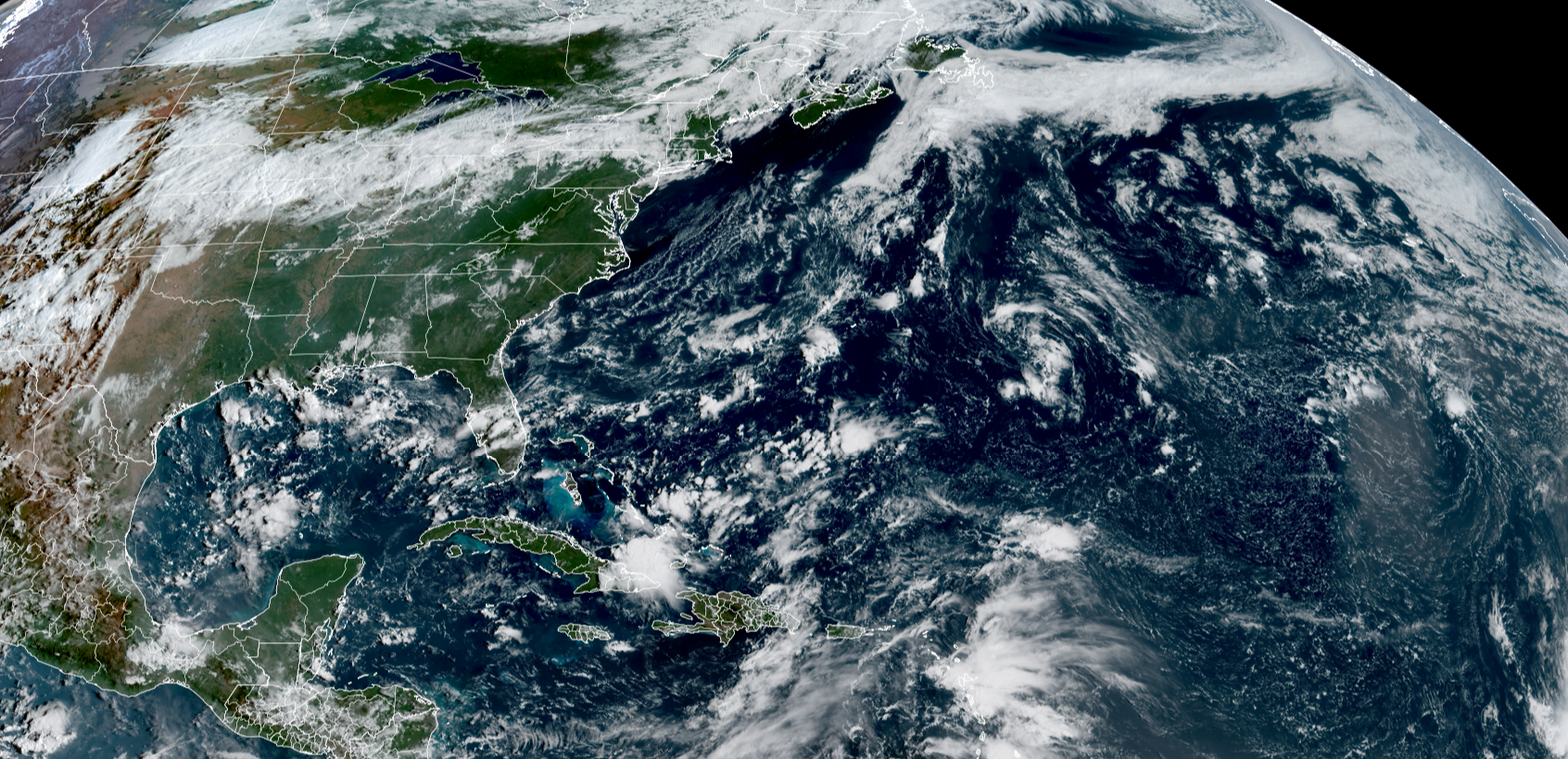
The Atlantic Basin hasn't seen a single hurricane at this point in the season for the first time in 112 years, the last "year without a hurricane."
Hostile El Niño-driven winds have suppressed the Atlantic season, with just five named storms and no hurricanes thus far and El Niño potentially approaching historic strength later this year.
TROPICAL STORM FAY KEEPS CHURNING IN ATLANTIC, BUT ITS SHOT AT BECOMING A HURRICANE IS FADING
The FOX Forecast Center said 1914 and 1907 are the only years without recorded hurricanes. However, as FOX Weather Hurricane Specialist Bryan Norcross notes, hurricanes could have formed in those years that went undetected because they remained far from land and ships at sea.
Meanwhile, the Atlantic is also off to its quietest start on record in the satellite era, since 1966, as Tropical Storm Fay is weakening in the open Atlantic after briefly approaching hurricane strength Sunday.
GET THE LATEST FROM FOX WEATHER HURRICANE SPECIALIST BRYAN NORCROSS
Despite moving over warmer waters, Fay is expected to gradually weaken and dissipate by the end of the week.
Although Norcross cautioned people to not let their guard down — particularly people in Florida.
"It's extremely unusual, of course, to get this far into the season with the Atlantic hurricane-free," Norcross said.
HURRICANE POLO EXPECTED TO FUEL SOUTHWEST FLOOD THREAT AMID ACTIVE PACIFIC
"But this week is only the mid-point of the hurricane season for South Florida, if you average landfall dates over the long-term record," he continued.
According to NOAA, El Niño is the main driving factor behind the dearth of Atlantic tropical activity.
El Niño is one of three phases of a climate cycle called the El Niño-Southern Oscillation (ENSO). It describes natural temperature changes in the central Pacific Ocean that alter atmospheric circulation and can greatly influence global weather.
It is typically associated with reduced tropical cyclone activity in the Atlantic Basin and increased storm activity in the Eastern and Central Pacific basins, along with a host of other weather impacts around the world outside of hurricane season.
During El Niño, above-average water temperatures in the central and eastern Pacific Ocean alter the position and strength of the subtropical jet stream. It's typically more robust and extends well into the Caribbean and Atlantic Ocean. Think of the subtropical jet stream as a belt of very fast winds high in the atmosphere.
It's these strong winds that hinder tropical development in the Atlantic during an El Niño. Calm conditions are generally more conducive to hurricane formation. Meanwhile, in the Pacific, the script is completely flipped.
These climate patterns have certainly held true so far this season, with the Pacific producing 18 named storms, including six hurricanes, four of which have reached major hurricane status. Meanwhile, the Atlantic has produced just five named storms and no hurricanes, as mentioned.
When water temperatures in the El Niño zone reach at least 2 degrees Celsius above average for at least three consecutive months, it is considered a Super El Niño.
El Niño conditions have strengthened significantly in the Central Pacific, now with a 97% chance of becoming a Super El Niño between October and December 2026, according to NOAA.
However, climatologically, about 40% of the season’s hurricane activity still remains. Historically, the Central American Gyre (CAG), typically aids tropical cyclone development during early fall and lates spring.
The CAG is a sprawling area of low pressure near or over Central America that can produce locally heavy rain, rough surf and mudslides, and can generate tropical systems in both the Gulf and Eastern Pacific.
7 THINGS TO KNOW ABOUT MUDSLIDES
In fact, Hurricane Idalia was spawned by the CAG in 2023, according to the FOX Forecast Center.
However, during Super El Niño years, no tropical systems formed in the Gulf or Caribbean in October during those years since 1960, the FOX Forecast Center found.
Meanwhile, if September ends without a hurricane, it would be just the eighth time on record since the 1850s, and only the second since the start of the satellite era (1966). The other years without a September hurricane were: 1994, 1939, 1925, 1914, 1907, 1905, 1895.
The post Historically quiet Atlantic hurricane season approaches century-old record amid brewing Super El Niño appeared first on Fox Weather