












- Hedge funds were already cutting precious-metal exposure before gold and silver collapsed.
- Positioning data show a rotation out of metals and into energy as volatility surged.
- Silver's crowded rally left it especially vulnerable when the sell-off hit.
Gold and silver's spectacular crash stunned markets, but hedge funds were already shifting their exposure away from precious metals before prices collapsed, positioning data showed.
Spot gold was trading around $4,829 per troy ounce at 12.56 a.m. ET on Tuesday — more than 10% off its record high above $5,500 per ounce reached just last week.
The spot silver price was around $83.40 per ounce — over 30% lower than its record high of over $121 per ounce.
Those shifts in trading positions show up in the Commodity Futures Trading Commission's weekly Commitments of Traders report, which provides a snapshot of investors' holdings in US futures markets as of Tuesday. It's released every Friday.
The latest update, covering managed money positioning across 25 major commodity futures markets, highlighted a rotation out of metals — including gold, silver, and platinum — as hedge funds reduced long exposure amid a sharp rise in volatility, Ole Hansen, the head of commodity strategy at Saxo Bank, wrote in an analysis on Monday.
Meanwhile, investors reallocated capital into energy markets, where oil prices had been under pressure for years due to ample supply and weak demand growth.
Oil prices got a lift coming into 2026 amid fears of supply disruption following the Trump administration's raid on Venezuela, renewed geopolitical tensions with Iran, and winter storms in the US.
US West Texas Intermediate crude oil futures are trading around $62 per barrel — about 8% higher this year.
Long positions in crude oil futures reached their highest levels since August, and net long silver positions slumped to a two-year low, Hansen wrote.
The heavy pullback in silver bets leaves funds with "plenty of room" to re-enter the trade once volatility normalizes, and the technical outlook improves. However, this would likely take time following Friday's meltdown, Hansen added.
Why silver unraveled
While both gold and silver prices have come off sharply from record highs, the blistering rally — particularly in the white metal — had already triggered warnings about charging headlong.
<script type="text/javascript" defer="" src="https://datawrapper.dwcdn.net/KaylS/embed.js" charset="utf-8" data-target="#datawrapper-vis-KaylS"></script><noscript>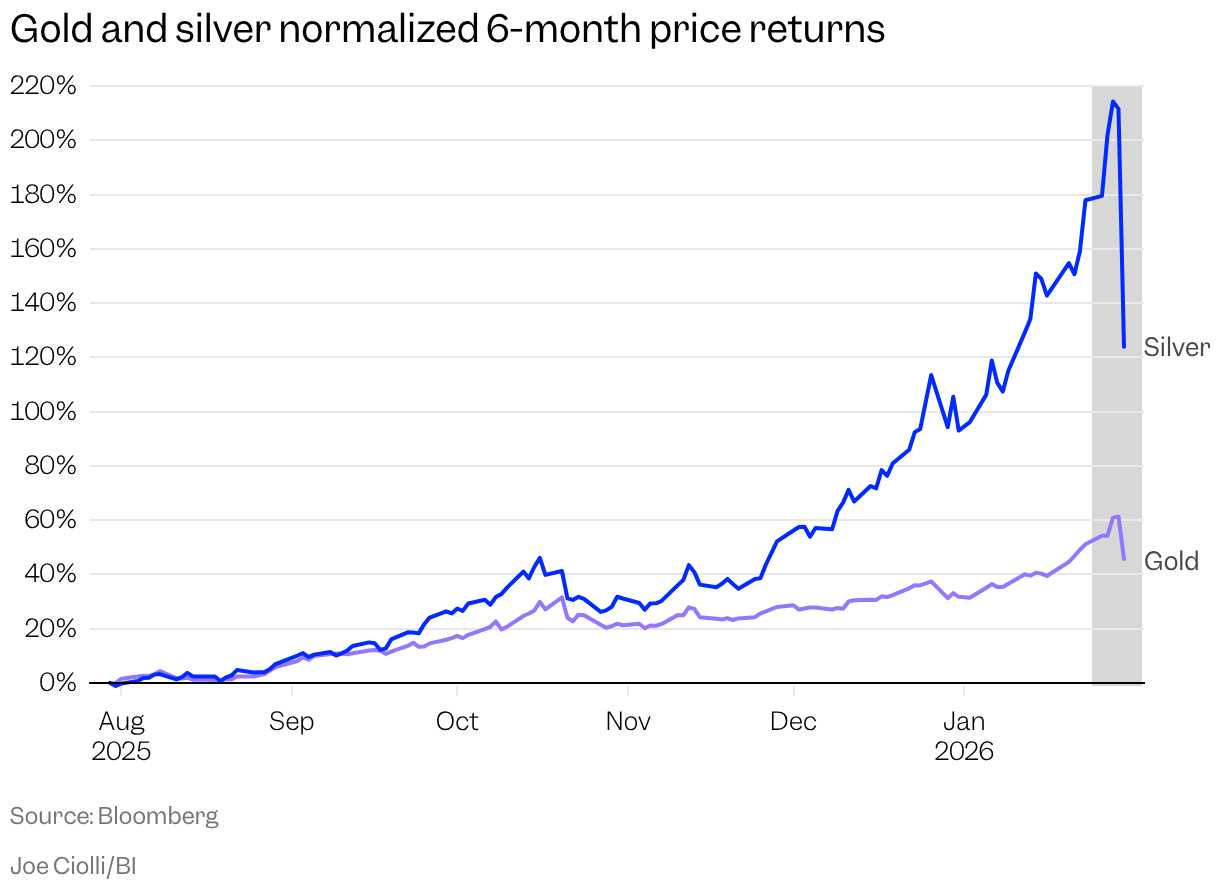
</noscript>
"The run up in December and January was primarily not traditional gold and silver long-term, 'I want to buy physical metal and hold it' investors," Jeffrey Christian, a longtime commodities analyst and managing director at CPM Group, told Bloomberg TV on Monday.
Christian pointed to market mechanics as a key driver of the metals meltdown, as investors adjusted their positions ahead of the end of January.
President Donald Trump's nomination of Kevin Warsh as the next Federal Reserve Chair magnified the drawdown in a market that was already pumped up by speculation and trading activity.
"Extreme trading volumes across futures, options, and ETFs, combined with increasingly strained market plumbing, amplified the move. Eventually, the system buckled," Hansen added.
Analysts warn that while fundamental drivers for precious metals — including geopolitical tensions and central bank buying — remain intact, the recent correction is a warning for momentum and FOMO traders.
"When gold and silver turn into hot topics at dinner tables and in workplaces, it is often a sign that a particular phase of the rally is nearing exhaustion," Hansen wrote.
The post Before gold and silver crashed, hedge funds were already making a quiet move appeared first on Business Insider