




































- Gold has tumbled from near record highs since the start of the Iran war.
- The decline has surprised those who expect the precious metal to act like an inflation hedge.
- Detailed below are three reasons for gold's sharp decline.
For months, buying gold was a sure thing.
It was the main beneficiary of the debasement trade, which saw investors dump the US dollar and government bonds in favor of the precious metal. It's been a key material for the global data-center build-out. And, perhaps most notably, it became a favorite of retail traders.
Over a glorious several-month period, an asset known for being a safe haven morphed into a speculative bet. The gains were robust — until they suddenly weren't.
First came a knee-jerk sell-off in gold after Kevin Warsh was nominated as the new Fed Chair in late January. But the metal largely recovered that loss.
Now, since the start of the Iran war, gold is back down more than 10%.
<script type="text/javascript" defer="" src="https://datawrapper.dwcdn.net/rIdkU/embed.js" charset="utf-8" data-target="#datawrapper-vis-rIdkU"></script><noscript>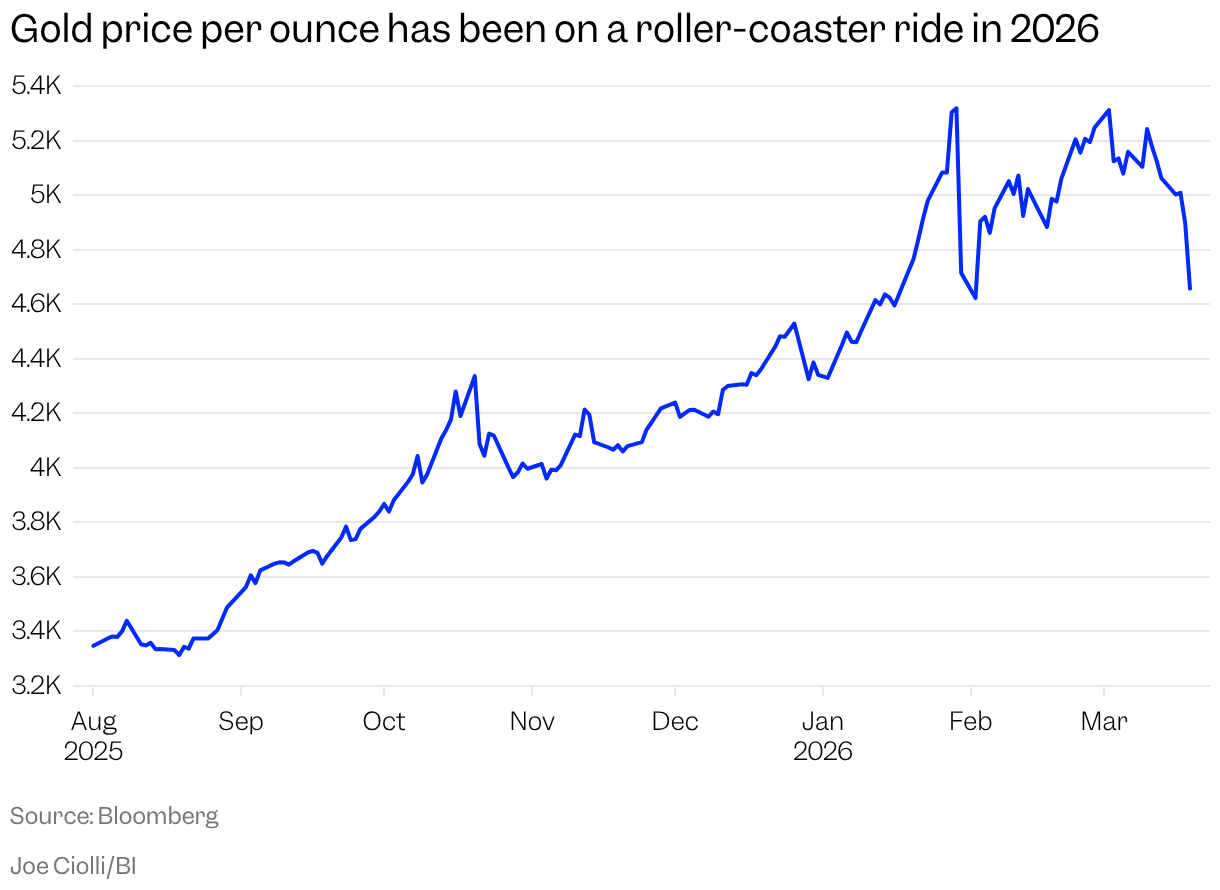 </noscript>
So what gives? With inflation a primary worry for investors right now, shouldn't gold's historical role as an inflation hedge be pushing the metal higher? Not in this case.
Here are three reasons gold has taken a dive:
1. It doesn't actually track inflation.
Gold may have served as an inflation hedge in the past, but it doesn't track inflation. The metal instead moves with inflation-adjusted interest rates — and those have been up sharply since the start of the Iran war. That's because …
2. The market has thrown in the towel on rate cuts.
Bond yields have risen during the Iran war because investors are bracing for an energy-driven inflation spike. Jerome Powell said on Wednesday that the Fed is closely monitoring it. Gas prices at the pump have already been increasing.
That's all combined to throw cold water on the prospect of rate cuts. As of Thursday, the bond market was no longer pricing in a single cut in 2026. Since gold doesn't bear interest, it loses appeal when bond yields are rising.
3. Speculative gains are evaporating.
The types of investors who drive retail speculation are usually weak hands in the market. When the easy gains are gone, and the fun is over, they tend to head for the exits.
Market vet Ed Yardeni summed it up succinctly on Thursday: "Profit-taking following a meteoric rise."
So, as gold struggles and bonds sell off, where are investors heading for safety? The greenback has been a primary destination. The US Dollar Index is up 2% since the start of the war, and the currency has climbed against most of its global peers.
The future of gold will depend on how long the Iran war lasts, which will dictate when inflation worries ease. Only after those nerves settle — and the weak speculative hands have been washed out — can the metal get its groove back as a safe-haven asset.
The post Gold was the hottest investment in the world. Now the party is over. appeared first on Business Insider