




































What do we gain from space travel? The answer isn’t just out there. It’s all around us.
Many of the tools and technologies we take for granted every day can be directly traced to humanity's quest to reach space.
In its conquest for space travel, humanity has obtained more than satellites and science: the engineering behind the complex challenges achieved to make life possible in space has since lead to inventions of items that have become indispensable in everyday life.
ARTEMIS II BRINGS PIECES OF THE PAST ON ITS HISTORIC DEEP SPACE VOYAGE
From memory foam to portable computers, space exploration has sparked a wide range of innovations, including scratch-resistant lenses, CAT scanners, LEDs, ear thermometers and more.
Humanity's conquest of spaceflight has pushed the limits of what had been previously thought possible – paving the way for innovation that continues to be essential in everyday life.
The solutions to the extreme engineering challenges behind spaceflight eventually trickled down to consumer markets, onto the store shelves and into households across the world.
The origin of the water filtration system, hand-held vacuum and home insulation material can all be traced back to space travel.
HAWAII'S KILAUEA VOLCANO IS BREWING YET AGAIN, PREPARING TO PUT ON A SHOW FOR IT'S 44TH EPISODE
In the 1960s, NASA developed an electrolytic silver iodizer to purify drinking water for astronauts – the same technology now widely used to kill bacteria in recreational pools.
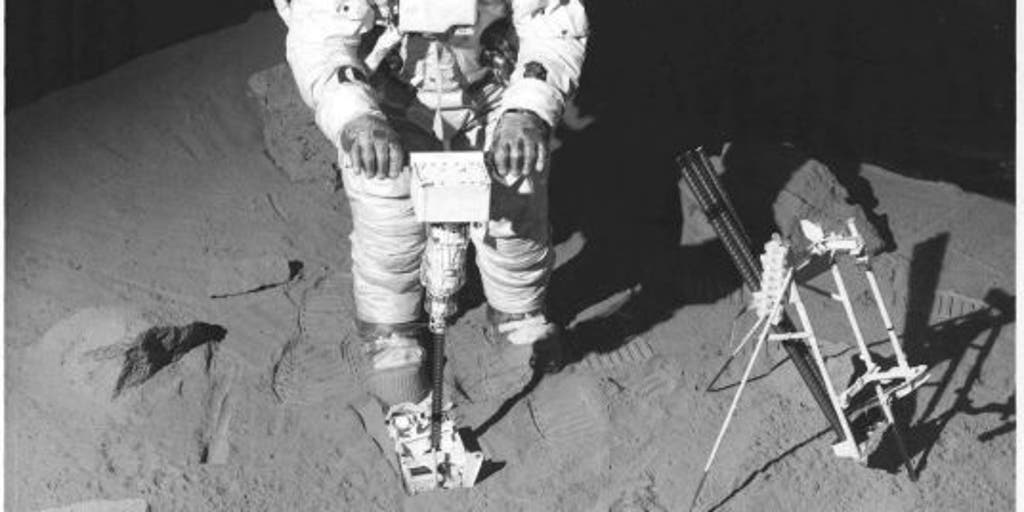
When NASA pushed the boundaries and set their target on the moon, they approached Black and Decker to develop a lightweight device to collect samples on the moon, which would be commercially released as the Dustbuster in 1979.
TIMELINE: A DAY-BY-DAY GUIDE TO THE 10-DAY ARTEMIS II MISSION TO BRING HUMANITY BACK TO THE MOON
In order to combat the severe temperatures in space, NASA developed insulation from aluminized polyester that is now used in most home insulation.
Space travel is responsible for pushing technological barriers previously thought impossible.
The GRiD Compass, one of the first portable laptops, was developed in 1982 to serve as a single point of contact on space missions. From its creation, the laptop's new software would go on to become popular in the commercial markets.
In the 1960s, a NASA researcher was trying to make computers more interactive, becoming a catalyst for the invention of the computer mouse.
NASA'S ARTEMIS PROGRAM: PAVING THE WAY FOR HUMANKIND'S RETURN TO THE MOON AND BEYOND
Renowned for advancing communications technology, NASA developed wireless headsets to abandon the burden wires posed to the astronauts.
In the 1990s, a team at NASA's Jet Propulsion Laboratory worked to create cameras small enough to fit on a spacecraft with scientific quality – the same technology found in ⅓ of camera phones today.
MEET THE ASTRONAUTS PREPARING FOR HUMANITY’S RETURN TO THE MOON ON THE ARTEMIS II MISSION
The crew of four astronauts on the historic Artemis II mission were equipped with brand-new iPhones, which, among other things, will be used to capture photos.
As NASA and its affiliated space programs pursued what once seemed impossible, they drove innovations that continue to shape the world today—often in unexpected ways. Few could have predicted that inventions like scratch-resistant lenses, athletic shoes and artificial limbs would trace their origins back to the space program.
While researching protective coatings for aerospace applications, the Lewis Research Center developed and patented a process that was later adapted for scratch-resistant lenses.
WATCH: ARTEMIS II LIFTS OFF FROM KENNEDY SPACE CENTER
Even your shoes could be a product of space travel. A former NASA engineer first pitched the idea of Nike Air trainers, which likely wouldn't exist if it weren't for suit construction technology developed by NASA.
NASA's innovations in shock-absorbing materials coupled with robotic and extravehicular activities are being adapted to create more functionally dynamic artificial limbs.
The demands of spaceflight have also driven innovations like CAT scans, mine-detection technology and rescue tools for damaged vehicles.
WHAT KIND OF FOOD IS PACKED FOR THE ARTEMIS II SPACE MISSION?
The need for a good digital image is essential in a space program, which in turn helped create CAT scanners and radiography.
NASA's surplus rocket fuel is used to produce a flare that can safely destroy landmines by burning a hole through the mine without detonating it.
The jaws of life, an extraction tool used to free people from mangled vehicles, applies a miniature version of the explosive charge used to separate devices on the space shuttles.
Few realize just how far space-derived technology reaches, shaping industries from sports footwear and home insulation to medical imaging, all driven by the challenges and aspiration of sending humans into space.
The post Everyday innovations born from space travel appeared first on Fox Weather