





























Government officials are taking a new approach to help preserve the Colorado River by asking the public to do its part.
Since 2000, the Colorado River Basin has experienced a severe, historic drought, affecting the regional water supply and other essential resources.
According to the U.S. Geological Survey, the Colorado River Basin has experienced its lowest 16-year period of inflow in more than 100 years of recordkeeping.
In response to the growing crisis and ongoing disagreements among the Colorado River Basin states, Arizona, California, Colorado, Nevada, New Mexico, Utah, and Wyoming, officials have asked for the public's assistance.
"As reservoir elevations continued to fall and risk continued to increase, a series of interdependent agreements involving local, state, tribal and federal governments, water users and non-governmental organizations in both the United States and Mexico have enabled the system to operate by negotiated agreement rather than court determinations," said the Bureau of Reclamation.
This agreement includes the opportunity for people to be compensated for using less water, which benefits distribution, increases basin capacity, and benefits reservoir storage.
How much people could earn is undetermined, but nonetheless, it impacts water levels of the river.
Today, Lake Mead, which is a part of the Colorado River Basin, is about 150 feet higher than its historic low because of these public agreements.
'EVOLVING CRISIS': COULD EL NIÑO BRING NEEDED RAIN TO THE 2 LARGEST RESERVOIRS IN THE US?
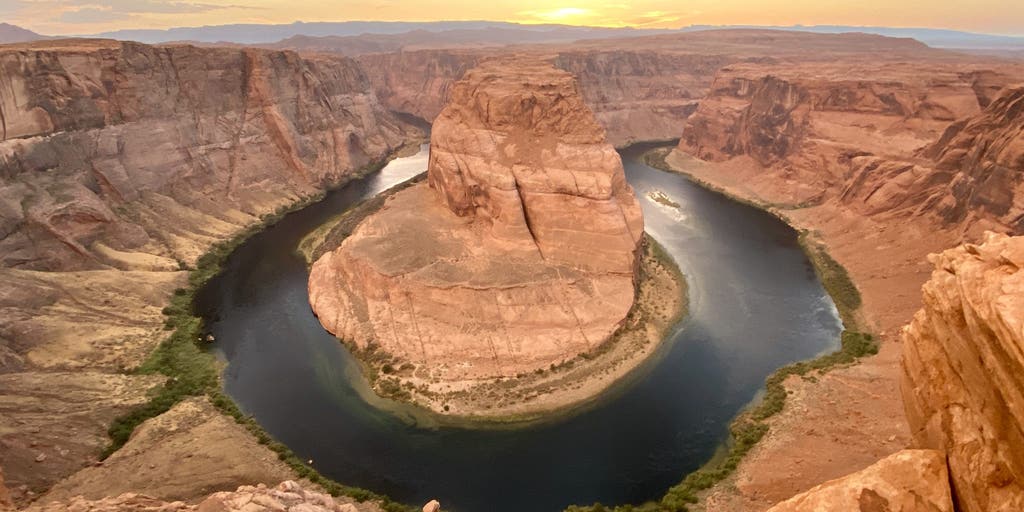
The Colorado River is essential for life in the Southwestern U.S. and Northwestern Mexico. According to the USGS, the body of water serves numerous purposes for millions of people.
ARIZONA DUST STORM CREATE UNHEALTHY AIR QUALITY FOR THOUSANDS IN THE PHOENIX METRO AREA
As state and federal government officials work together to implement an established 10-year plan, in the interim, consensus-based agreements continue to make an impact on the river system, which is vital to 40 million people.
"The preferred alternative establishes an adaptive decision framework that will be used to develop operating guidelines that are designed to ensure reliable operations while being able to respond to changing conditions over a 10-year period," said the Bureau of Reclamation.
Additional efforts to aid the river basin have included the Department of Interior implementing unprecedented measures by dumping 660,000 to one million acre-feet of additional water flows from the Flaming River Gorge reservoir into Lake Powell.
The post As the Colorado River Basin endures a historic drought, officials offer incentives to conserve water appeared first on Fox Weather