













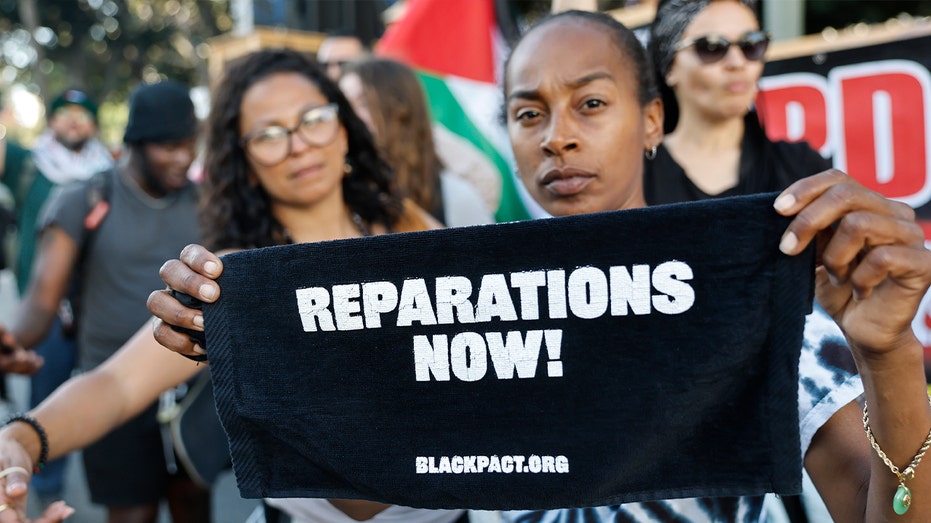





















The Cincinnati City Council will consider in early March a reparations housing program that would use tax revenue on marijuana to fund a portion of it.
The city is expected to discuss the "Cincinnati Real Property Reparations Program," a proposal cosponsored by Vice Mayor Jan-Michele Lemon Kearney and Councilman Scotty Johnson.
The program would offer assistance to "low-to-moderate income residents" and "any individual or family member of an individual who was prevented from buying a home due to discriminatory practices," the Cincinnati Enquirer reported.
The two officials want an initial investment of $5 million for the program using proceeds from marijuana tax revenue and the city’s capital budget, according to the Enquirer. The program would target residents in 15 of the city's 52 neighborhoods, and would allow recipients to use the money for a down payment, pay delinquent property taxes or emergency home repairs.
ILLINOIS CITY'S REPARATIONS PLAN IS MISGUIDED, DIVISIVE AND LIKELY UNCONSTITUTIONAL
Supporters of the proposal point to a city housing policy from the 1920s that discriminated against Black residents from owning property. The city's Real Estate Board forbade agents from selling or renting homes to Black residents in White or suburban neighborhoods at the time. Supporters also cite federal redlining policies that prevented Black people from getting loans to purchase homes.
"Let's repair some of the damage done to low-income communities that kept the residents from owning homes and other real estate and prevented building of generational wealth," Kearney told the Enquirer.
Cincinnati NAACP President David Whitehead urged people not to be opposed to the term "reparation" and be more receptive to it.
"I think people get confused and caught up with word 'reparation,'" Whitehead said. "It’s restoring people that have been unfairly treated."
Whitehead, Kearney, nor Johnson responded to Fox News Digital's request for comment.
Reparation programs continue to be debated and introduced around the country.
Evanston, Illinois was the first city to issue $25,000 in reparation payments to some Black residents, using marijuana tax revenue.
Proponents of Evanston's program said their city provided a model for others to follow.
Evanston Mayor Daniel Biss said his city showed how reparations could be a "tangible" reality.
"Our job here is just to move forward and to continue being that example, to continue illustrating that a small municipality can make real tangible progress," he said.
The post Cincinnati may be the next city to fund reparations program with marijuana tax money appeared first on FOX News