






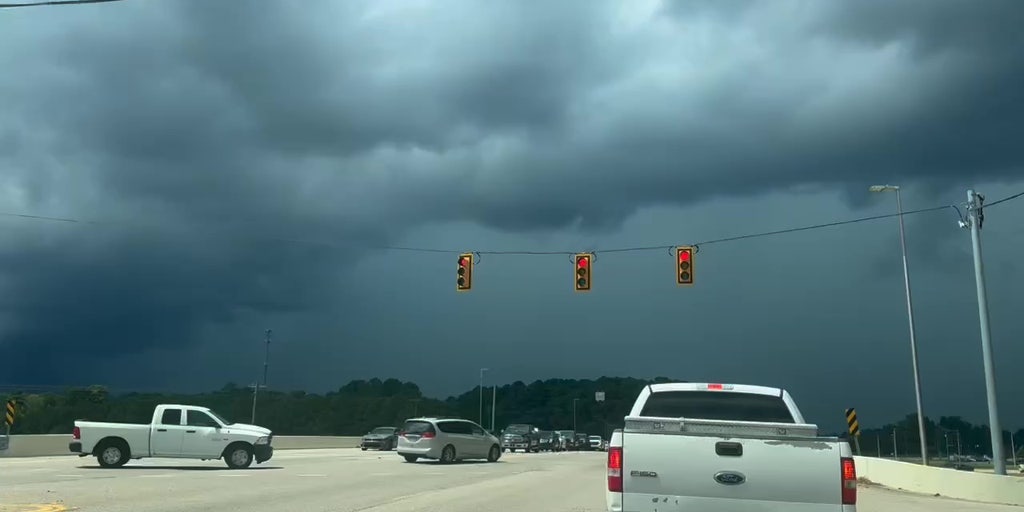





















Not everything you've heard about the weather is true. We are separating weather facts from common misconceptions.
False: It is not safe to shower during thunderstorms as both water and metal are good conductors of electricity, according to the Center for Disease Control and Prevention (CDC).
You should avoid washing your hands, washing dishes and taking baths. Lightning can travel through plumbing and pipes, so it is best to avoid all water during a thunderstorm.
False: Cold weather and rain don’t get you sick, but they do make you more vulnerable. What gives you a cold is what you do or don’t do, according to the Cleveland Clinic.
For example, if it is cold or rainy out, you may be more likely to stay indoors in crowded spaces. This allows germs to spread more easily, increasing your chances of getting sick.
Staying indoors can also lower your vitamin D levels. Vitamin D supports your immune system, helping it fight off infections.
DEADLY TICK-BORNE DISEASE THAT CAN CAUSE BRAIN DAMAGE SPREADING ACROSS THE US
All this combined can lead to dehydration as well. When indoors or in cold temperatures, people do not realize they are thirsty. Dehydration weakens your immune system as water is essential to your body.
Without proper amounts of water, your body can not efficiently create infection-fighting antibodies, flush out toxins or circulate blood cells.
This all weakens your immune system, leading to an increased risk of getting sick.
True: Storms can come with a scent. It’s called petrichor and is caused by a mixture of geosmin, plant oils and ozone, according to sciencenotes.org.
When rain falls, cyanobacteria and bacteria erupt and release the geosmin compound.
When it is dry outside, plants release oils that help keep in moisture. This lowers the plant's risk of drying out. When it rains, these oils splash up, enter the air and mix with the geosmin.
The last component is ozone, which is produced from lightning. When the energy of lightning breaks the chemical bond that holds nitrogen (N2) and oxygen (O2) molecules together, the oxygen molecules combine and form ozone (O3).
As the storm arrives, downdraft brings down this ozone, allowing the scent to come before a storm.
Humans can smell geosmin at very small concentrations. We are more sensitive to geosmin than a shark is to blood. So yes, you can smell rain.
False: Lightning does not only strike the tallest object. While lighting does favor tall, isolated objects because of the shorter travel distance between a cloud and an object, lightning can hit shorter objects, according to NOAA.
Lightning favors the path of least resistance to an anchor point. This means that even though there may be a 6-foot pole, six feet away from you, the path between you and the anvil — the top of the lighting strike — could be the more direct and less resistant path.
SEE IT: LIGHTNING STRIKE CAUSES MAJOR HOUSE FIRE DURING SEVERE THUNDERSTORMS IN TEXAS
In addition, lightning can "splash" off objects like trees or metal bleachers, causing it to travel sideways and strike something nearby. That’s why it is important to go inside during thunderstorms.
True: Weather changes that cause or worsen joint pain have to do with the change in barometric pressures, according to the Cleveland Clinic.
Barometric pressure measures the weight of the air and changes as our weather conditions change. Decreasing barometric pressure comes with storms or colder weather. With this, there is less pressure on our body, which causes a lack of compression.
CAN JOINT PAIN REALLY HELP YOU PREDICT THE RAIN?
This allows tissues within our bodies to swell slightly, which can irritate joints. The cold adds to this as it can make your muscles and ligaments stiffer.
False: Lightning can - and often does - strike the same spot multiple times. Chances of this happening increase if the object is tall and isolated.
In fact, the Empire State Building is hit by lightning an average of 25 times a year, the Empire State Building said.
VIDEO: LIGHTNING STRIKE CAUSES WIND TURBINE FIRE IN TEXAS
Many use this phrase to reassure people that a bad situation won’t happen again. But the truth is, even when the odds of something extremely unlikely happening more than once are very low, there's still a chance it could happen.
In the United States, there is an average of 20 million cloud-to-ground lightning strikes per year. So the chance of a place getting struck more than once over many years is actually high.
True, well sort of: Some animals can forecast weather through atmospheric changes, but not all, according to Weather Station Advisor.
Take dogs, for example, hours leading up to a storm, you might notice your furry friend getting anxious or trying to hide. What they are detecting is the atmospheric change of pressure and the static electric field buildup that comes with storms.
'BLESSING IN DISGUISE': 120 ANIMALS EVACUATED FROM WASHINGTON ANIMAL SHELTER AHEAD OF FLOODING
Fishermen have noted that fish behave the same way and can sense the barometric pressure changes. In fact, back in 2001, sharks sensed the barometric pressure changes and moved to deeper waters before Tropical Storm Gabrielle made landfall.
On the other hand, some ideas of animals predicting weather can be a stretch or misinterpreted. Let’s take a look at Groundhog Day.
The concept that Punxsutawney Phil can tell us if we have six more weeks of winter has only been right 39% of the time. His decision to burrow or not is decided by the animal’s hibernation cycle, not by weather readings.
Another misconception is that the wooly bear caterpillar can predict how severe a winter will be. It is said that a wider brown band means a milder winter, but in reality, the bandwidth is determined by the caterpillar’s age, diet and species.
THESE ARE THE ANIMALS OTHER THAN PUNXSUTAWNEY PHIL THAT WILL PREDICT END OF WINTER ON GROUNDHOG DAY
So yes, animal behavior can signal weather changes, but not all are reliable or backed by science.
True: If you are going from point A to point B, running can make you less wet. However, there is a tradeoff between running and walking.
If you walk through a rainstorm, there is a higher chance that rain will fall on your head and shoulders because you're outside longer.
THIS IS HOW TEMPERATURES IMPACT YOUR RUNNING PERFORMANCE
If you run through a rainstorm, you are likely to get more wet on your front because you are colliding with more raindrops, but you are in the rain for less time.
The post Here are 8 of the biggest weather myths explained appeared first on Fox Weather