















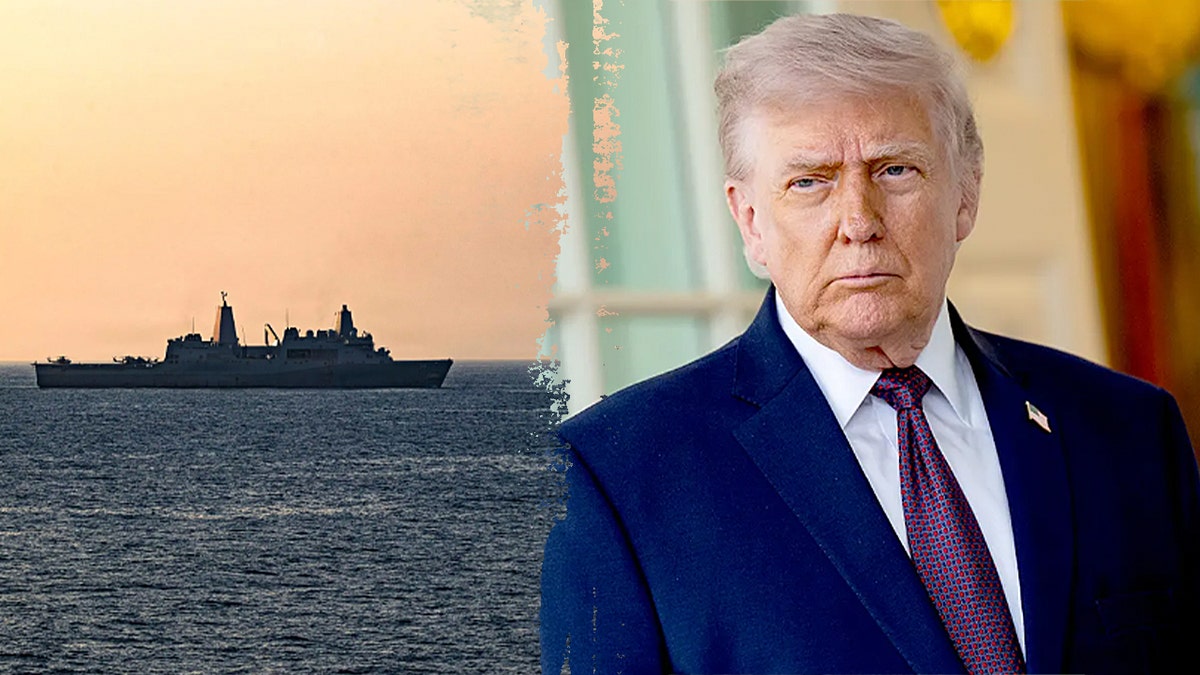





















President Trump will present the emerging Iran agreement as vindication of peace through strength. He will argue that American military power forced Tehran to the negotiating table, blocked a nuclear Iran and ended months of choking instability in the Strait of Hormuz.
He is not wrong about the military record. But wars are not judged by the speeches that launch them. They are judged by the conditions they leave behind. That is the standard Carl von Clausewitz set — and it is the standard that must be applied to whatever Washington is about to sign.
What the Military Achieved
America and Israel achieved undeniable battlefield results. Iranian air defenses were degraded, missile sites struck, naval capabilities weakened and key IRGC leaders killed. Tehran’s proxy networks sustained significant setbacks. The operation demonstrated overwhelming U.S.–Israeli military superiority.
Militarily, Iran paid a steep price. Battlefield dominance and strategic success are not the same thing.
The Deal Taking Shape
Trump declared Saturday that a deal reopening the Strait of Hormuz was "largely negotiated." The framework centers on an immediate opening of the strait in exchange for lifting the U.S. naval blockade, followed by 60 days of nuclear negotiations. The draft memorandum of understanding, according to Axios, commits Iran to never pursuing nuclear weapons and to negotiating a suspension of its enrichment program. Washington would discuss lifting sanctions and unfreezing Iranian funds — but only implement those steps as part of a final, verified agreement.
WHY TRUMP, IRAN SEEM LIGHT-YEARS APART ON ANY POSSIBLE DEAL TO END THE WAR
A senior Trump administration official said Sunday that Iran agreed in principle to dispose of its highly enriched uranium stockpile. The mechanism, however, remains unsettled. The Trump administration wants the final deal to cover all of Iran’s roughly 2,000 kilograms of enriched uranium — not just the 450 kilograms enriched to near-weapons-grade. Tehran also holds substantial quantities of lower-enriched uranium that any credible denuclearization agreement must address. "Nobody disputes that the stockpile will be disposed of. The question is how," the official said.
The details remain treacherous. Tehran disputes American characterizations of the uranium surrender and insists sanctions relief must come first. Enrichment, inspections, missile restrictions and proxy operations remain unresolved.
Kicking the Can Again
Permanent denuclearization was not achieved. The 60-day clock opens a negotiating window, not a settled outcome. Tehran has played this game before. The 2015 JCPOA deferred the nuclear question rather than resolved it — and Iran spent those years expanding its enrichment capability. This memorandum of understanding may do the same.
The ayatollahs buy time through incremental compliance. As I argued in this space last month, regime survival is Tehran’s definition of victory. If Iran exits 60 days of negotiations with its enrichment infrastructure intact and its frozen assets unlocked, it will have preserved its strategic position at acceptable cost.
Trump’s Broader Vision
Trump is not framing this as a ceasefire alone. On Sunday he took to Truth Social to connect the Iran negotiations with a broader regional realignment. "I would like to thank, thus far, all of the countries of the Middle East for their support and cooperation, which will be further enhanced and strengthened by their joining the Nations of the historic Abraham Accords," Trump wrote. He added: "Who knows, perhaps the Islamic Republic of Iran would like to join, as well!" According to Axios, Trump told leaders of Saudi Arabia, Qatar, Pakistan, Turkey, Egypt, Jordan, Bahrain and the UAE during a Saturday conference call that he wants their nations to sign peace agreements with Israel once the Iran conflict ends. Senior administration officials described the framework as "Abraham Accords Plus."
That vision is strategically coherent — and deeply ambitious. Iran’s ayatollahs have never recognized Israel and remain committed to its destruction. Any accord built on Israeli recognition is a concession no sitting Iranian leadership can make and survive politically at home.
Iran’s Weapon No Bomb Could Match
Iran’s most powerful weapon in this war was never a centrifuge. The ayatollahs understood before the first strike that their geography gave them a lever no air campaign could pry loose. The Strait of Hormuz — through which roughly one-quarter of the world’s seaborne oil trade passes daily — imposed severe economic pressure on the entire world without requiring Iran to win a single military engagement.
That is why Gulf states, global markets, and energy-dependent economies pushed hard for de-escalation. Iran lost most of the fighting and preserved the leverage it entered with. Tehran will not forget that.
The Opposition Casualty
Before the conflict, anti-regime sentiment inside Iran was visible and growing. Wars often strengthen the very regimes they fail to topple. Nationalism intensifies under foreign attack. Wartime crackdowns suppress dissent. Reports now indicate intensified internal repression as the regime consolidates control. The war may have weakened Iran’s anti-regime forces precisely when they appeared strongest — an outcome no strike package could have anticipated or corrected.
History’s Verdict
History will not be kind to the architects of this war. America spent blood, a significant part of its arsenal, treasure, and strategic credibility. The Iranian regime survived intact. The nuclear program — set back but not eliminated by the June 2025 strikes — remains in negotiation, not foreclosed. Proxy networks remain armed. The Strait remains a choke point Tehran knows how to exploit.
TRUMP PUSHED IRAN TO THE BRINK — BUT DID WE WIN ANYTHING THAT LASTS?
The precedents are sobering. Hezbollah emerged from the 2006 Lebanon war bloodied but politically emboldened. The Taliban outlasted two decades of U.S. military pressure. North Vietnam absorbed devastating losses after Tet and still won the political contest.
CLICK HERE FOR MORE FOX NEWS OPINION
Cuba should study that record carefully. The Trump administration is now developing military options against Havana, applying a pressure template drawn from Iran. But Iran demonstrated that airpower and naval blockades do not by themselves produce political transformation against a regime optimized for survival. Before Washington commits to another military campaign against an ideologically hardened government, the Iran ledger demands an honest accounting.
America demonstrated overwhelming military power in this war. Iran demonstrated political endurance. As I argued in April when Operation Epic Fury still lacked a defined political end state, the Clausewitz standard demands one question: did military force serve a coherent political objective?
If the Iranian regime emerges intact, enrichment-capable on a monitored and temporary basis, with Hormuz leverage it already knew how to use — that question remains unanswered.
A memorandum of understanding will not resolve it. Sixty days of negotiation will not resolve it. What Iran does when the clock runs out will.
CLICK HERE TO READ MORE FROM ROBERT MAGINNIS
The post Any new Iran deal should be judged by results, not victory-lap rhetoric appeared first on FOX News