









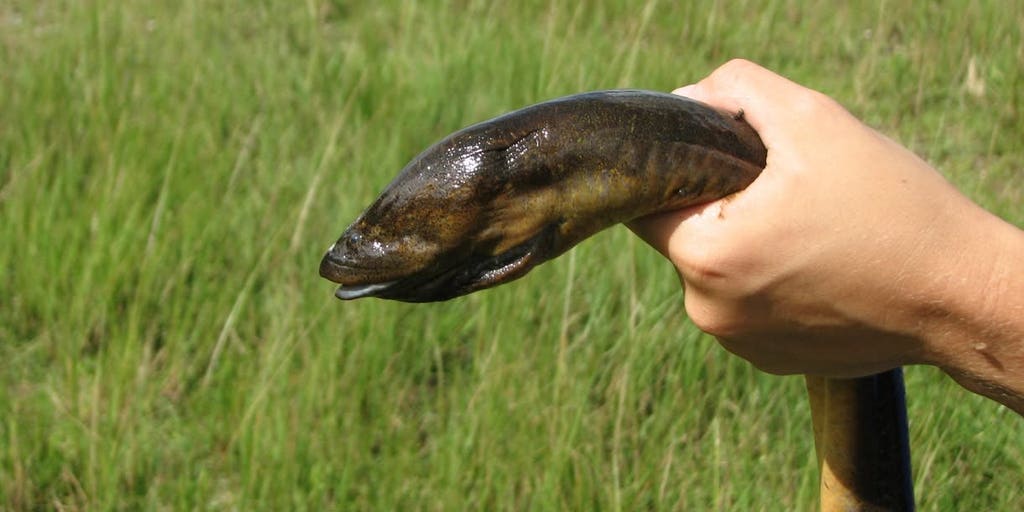





















The Everglades’ latest invasive threat isn’t a snake lurking in the grass, it’s an Asian swamp eel moving through the wetlands, as new research links the invasive zoo animal to amphibians in the U.S.'s largest wetland.
The Asian Swamp Eel, Monopterus albus, is a high-risk, invasive species that is eating Florida alive.
The introduction of the eel-like creature native to eastern and southeastern Asia has coincided with significant declines in the abundance of native fishes and decapods in the Sunshine State.
MASSIVE PYTHON FOUND ON BUSY NYC BOARDWALK AS FAMILIES, CHILDREN ENJOY BEACH DAY
Since its introduction, traced back to live releases from the aquarium trade and from fish markets, the Asian swamp eel has since become a problem that is slipping out of control.
According to a study published in Freshwater Biology, invasive Asian swamp eels are now the leading predictor of lower amphibian abundance and altered wildlife communities across parts of the Everglades.
Researchers from the University of Miami, working with scientists from the South Florida Water Management District and Florida International University, surveyed 30 sites across four major Everglades regions during the summer of 2022, documenting 2,251 amphibians across nine species.
BRAIN-EATING AMOEBA DETECTED IN WATER AT ICONIC US NATIONAL PARKS, STUDY FINDS
At first, soil nutrient levels appeared to be the strongest influence on where amphibians were most abundant. But when researchers added data on invasive Asian swamp eels, the eels emerged as the leading predictor of both amphibian abundance and the makeup of the wetland communities — with higher eel numbers linked to fewer amphibians.
The Asian swamp eel has a proven track record, damaging rice fields in the Phillipines and Japan, where its burrowing behavior has resulted in negative economic impacts, according to the U.S. Fish and Wildlife Service, triggering its high risk tag by the agency.
Species that are considered high risk have a well-documented history of invasiveness in at least one location globally and are of establishment concern in the U.S., according to the agency.
THESE ARE THE 6 BIGGEST BEARS ON EARTH
The Everglades are not alone in confronting the invasive fish, as Asian swamp eels have also established populations in Georgia and New Jersey, and have been present in Hawaii for decades, the USGS said.
Researchers say the next step will be closely tracking amphibian populations while working to limit the eels’ spread, an effort that could help protect frogs, salamanders and the fragile Everglades food web they support.
The post Something is lurking beneath the Everglades — and Florida’s frogs and salamanders are at risk appeared first on Fox Weather