




















THE TAKEAWAY
POMPEII, Italy – A house is almost frozen in time, as archaeologists uncover a closet inside the ruins of a home devastated by the historic Mount Vesuvius eruption.
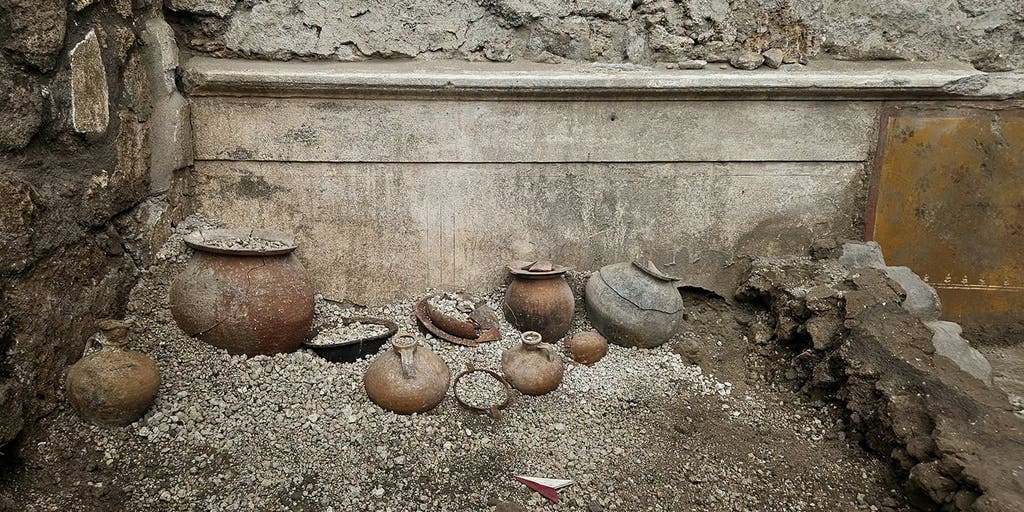
Archaeologists from the Pompeii Archaeological Park searched through a medium-sized house in the central area of the city, where they found a perfectly reconstructable closet, thanks to excavation data, in a home buried during the eruption of Mount Vesuvius in 79 AD.
Experts believe it was the residence of a woman, with a painting featuring beauty and personal habits, along with items we would normally use today, such as cosmetics, a balsam jar, an incense burner to help the home smell good, a bronze lantern and a wooden chest of drawers.
There is some consideration that the structure could have been a workshop, as it is situated along the Roman street of the city known as Via di Castricio.
Other items found include vases and pots made from bronze, glass and ceramic materials, all filled with personal memorabilia, such as a refined snuff bottle decorated with scales of pine and a necklace made of 20 mini faience objects, bone, vitreous paste and crystal.
Faience is a common affordable substitute for precious stones and may also have been developed to simulate highly prized stones.
REMARKABLY PRESERVED 3,300-YEAR-OLD SWORD DISCOVERED IN ITALIAN LAKE WITH BLADE STILL SHARP
These necklaces were known to represent deities such as Bes and Mercury and were given to children to help them feel better and protect them. But it turns out that adults also kept them, as evidenced by the items found here, often found in chests or, in this case, a fabric sack inside a closet.
These shed light on how ancient Romans sought to preserve profound and meaningful objects or memories in their lives.
Amongst the discoveries was also a beautifully designed marble object, likely used as furniture to sit, showcasing the amazing artistic details that the Romans are still known for today.
Another treasure trove of items found in the closet was 38 bronze coins inside a small container made of plant material.
"The presence of the coins, in particular, suggests that the owner or owners did not have time to recover the valuable, economic or emotional items," the Pompeii Archaeological Park said.
SOCCER FIELD WAS HIDING THE REMAINS OF A 770-YEAR-OLD CONVENT THOUGHT LOST FOR CENTURIES
If the Roman residents were in the city at the time of the eruption, they likely would have tried to flee to safety, leaving behind these personal and financial items.
The eruption sent many fleeing from the city, but some 2,000 people stayed behind, hiding in cellars or stone structures in hopes the eruption would pass.
WHAT WAS THE WEATHER LIKE ON AMERICA'S FIRST NATIONAL THANKSGIVING IN 1863?
The eruption of Mount Vesuvius lasted over 18 hours, burying Pompeii under 14 to 17 feet of ash and volcanic rock.
Over 2,000 people died, with the last major eruption happening in 1631.
ARCHAEOLOGISTS UNCOVER NEARLY 200-YEAR-OLD CANNONBALLS FROM THE BATTLE OF THE ALAMO
This discovery offers an opportunity to learn more about daily activities, such as personal habits and work, and how people preserved memories along the way.
The post Ancient Roman closet found untouched for nearly 2,000 years with personal belongings still inside appeared first on Fox Weather